Dog Limping but Not Crying: Should I See a Vet?
If your dog is limping but not crying, you should be concerned, not relieved. This isn't a sign they are fine; it's often a sign they are trying to hide discomfort, a behavior deeply rooted in their survival instincts. For an adopted dog, especially one with an unknown past, this silent signal can be even more important to recognize and act upon quickly.
Why Your Dog Isn't Crying (But Still Needs Your Attention)
Dogs are master concealers of pain, a trait from their wild ancestors where showing weakness meant vulnerability. A limp without vocalization doesn't mean the pain isn't there; it means your dog is stoic or trying to avoid appearing weak. This is particularly true for adopted dogs who might still be learning to trust their new environment and their new family, making them less likely to openly express discomfort.
Consider the instinctual drive to appear strong. In a pack, or even in a new home environment, a dog might suppress cries or yelps to avoid drawing negative attention or to maintain their perceived standing. They might simply whimper softly, lick the affected area, or show subtle behavioral shifts instead of outright vocalizing their pain. It's a survival mechanism, not a sign of minor injury.
I remember a scruffy Terrier mix named Cody at the New Orleans Animal Control back in 2021. He had a slight, intermittent limp but never once cried out, even when the shelter vet gently palpated his leg. It took extensive diagnostics, costing the shelter around $800, to discover he had an old, untreated hip injury that flared up with activity. His silence was misleading, and his future adopter needed to be prepared for ongoing management.
Common Causes Behind a Silent Limp
A dog limping without crying can stem from a variety of causes, ranging from minor sprains to serious orthopedic or neurological issues. These silent lamenesses often involve conditions that aren't acutely excruciating but cause persistent discomfort or instability. Understanding these potential culprits helps you communicate better with your veterinarian and provide context for their diagnosis.
Many factors can contribute to a subtle limp. Here are some of the most frequent offenders:
- Soft Tissue Injuries: Sprains or strains in muscles, tendons, or ligaments can cause discomfort without sharp pain. Think of a minor ankle twist in a human- it hurts, but you might not cry out.
- Paw Injuries: A thorn, a small cut, a bruised pad, or even a torn nail can cause a significant limp. Dogs might lick the paw but not necessarily vocalize pain, especially if the foreign object isn't causing constant sharp pain.
- Arthritis: Osteoarthritis, especially in older dogs, is a leading cause of gradual-onset limping. The pain is often dull and chronic rather than acute, so dogs might just move stiffly or favor a leg without crying. This is especially relevant for large dog breeds like German Shepherds or Labradors.
- Joint Issues: Conditions like hip or elbow dysplasia, luxating patella (kneecap slipping out of place), or even a minor cruciate ligament tear can cause instability and discomfort. The dog might avoid putting full weight on the limb or bunny-hop, but not cry.
- Neurological Problems: Spinal compression, nerve damage, or early stages of degenerative myelopathy can affect limb coordination and strength, leading to a limp. These can be particularly insidious because they might not present as "pain" in the traditional sense, but as weakness or odd gait.
Remember that chronic limping is defined as being present for two weeks or more. If your dog's limp persists beyond a day or two, it's time for a vet check.
The Adopted Dog Factor - Reading Subtle Signs
Adopted dogs, particularly those from challenging backgrounds or with limited prior socialization, often display pain differently than a dog who has known only comfort and stability. Their past experiences can make them more prone to hiding vulnerabilities, including physical pain. This means you need to be extra vigilant and look for non-obvious cues to assess their well-being in their new home.
A dog who spent time on the streets, or in an abusive situation, may have learned that showing weakness can put them at further risk. They might have old injuries that never healed properly, leading to a silent, underlying ache. When they come into a new home, they are already on high alert, trying to figure out the new rules and the new people. Adding pain to that mix can make them even more withdrawn or subtle in their expressions.
It's a harsh reality that many dogs entering local shelters arrive with untreated injuries or chronic conditions, silent sufferers who learned long ago that showing pain offers no relief. They carry these burdens, sometimes for years, before landing in a place where someone finally notices their quiet struggle. The sheer volume of neglected animals is heartbreaking, and a subtle limp in an adopted dog can be a quiet echo of that past.
My own Boxer mix, Milo, developed a subtle limp on his front left paw after a long hike in the Angeles National Forest. He didn't cry, but I noticed he was favoring the leg slightly, especially after resting. It turned out to be a minor strain that resolved with rest, but his silence didn't make it any less concerning. For a newly adopted dog like Hazel, a quiet Golden Retriever mix I heard about in Boise, her slight limp was missed for a full week because she was still adjusting to her new home and wasn't showing any obvious vulnerability. Her adopters initially thought she was just nervous.
When to See a Vet: Don't Wait and See
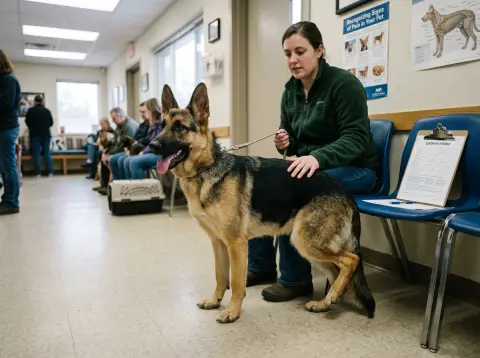
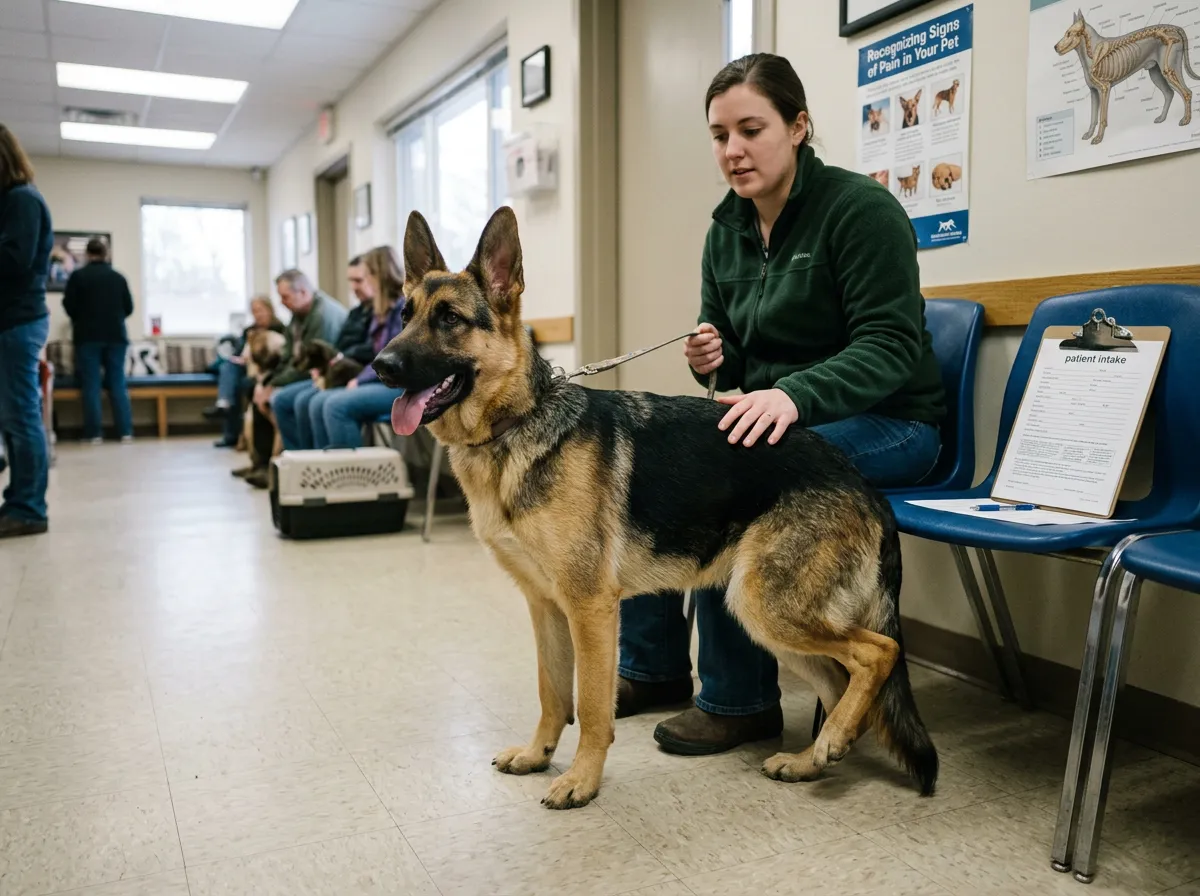
The decision to see a vet for a dog limping but not crying should err on the side of caution, especially if the limp persists or worsens. While a very mild, intermittent limp might be monitored for 24-48 hours if there are no other symptoms, any sign of discomfort, swelling, inability to bear weight, or changes in behavior warrants immediate professional evaluation. Early diagnosis can prevent conditions from becoming chronic.
Here's a quick guide to help you decide:
- Immediate Vet Visit (within 24 hours):
- Your dog refuses to bear any weight on the leg.
- There is visible swelling, bruising, or an open wound.
- The limp appeared suddenly after a fall, jump, or accident.
- Your dog seems lethargic, has a fever, or is showing other signs of illness.
- The limp is accompanied by shaking, panting, or other signs of distress, even if quiet.
- Vet Visit Soon (within 24-48 hours):
- The limp is mild but persistent and doesn't improve with rest after 24 hours.
- The limp seems to worsen after activity.
- You notice any subtle behavioral changes, like reluctance to jump, climb stairs, or play.
- Your dog is licking or chewing at the limb excessively.
- Monitor at Home (briefly, with caution):
- The limp is very mild and intermittent, lasting only a few steps, and then disappears.
- You can't find any visible injury or swelling.
- Your dog is otherwise acting completely normal and has no other symptoms.
Even for a mild limp, if it doesn't resolve completely within 24-48 hours, a trip to the vet is the responsible choice. The American Veterinary Medical Association (AVMA) consistently advises consulting a vet for any persistent lameness.
Preparing for Your Vet Visit and What to Expect
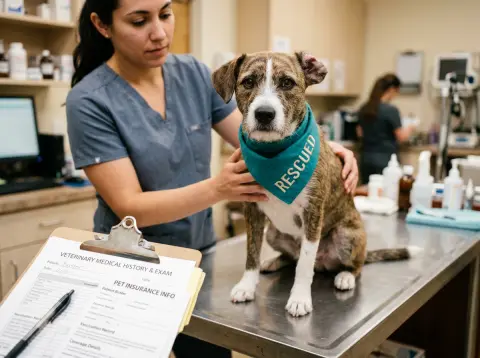
Preparing for your veterinary appointment when your dog is limping can make the visit more productive and efficient, helping your vet get a clearer picture of the situation. Gather as much information as possible about when the limp started, what makes it better or worse, and any other changes you've observed. This preparation is even more crucial for adopted dogs with incomplete medical histories.
Before you go, try to:
- Record a Video: If possible, take a short video of your dog walking or limping. Sometimes, the stress of the vet's office makes dogs "forget" to limp, or they move differently.
- Note Details: When did it start? Was there a specific event? Is it worse in the morning, after rest, or after exercise? Which leg seems affected?
- Check for Obvious Injuries: Gently examine your dog's paws, legs, and joints for swelling, cuts, thorns, or tenderness. Be careful not to cause further pain.
- List Medications/Supplements: Tell your vet about any medications, joint supplements (like glucosamine and chondroitin), or over-the-counter remedies you've given. Never give human pain medication without vet approval.
- Share History: For adopted dogs, provide any known history from the shelter or previous owners. Even vague details about past injuries can be helpful.
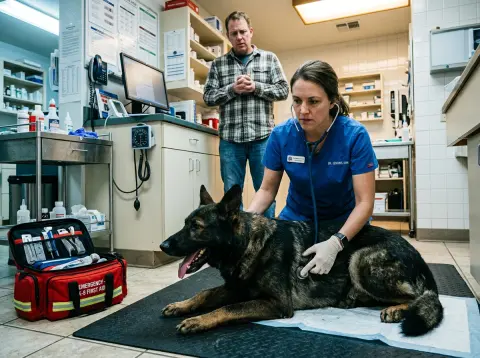
At the clinic, your vet will perform a thorough physical examination, observing your dog's gait and palpating their limbs and joints. They might recommend diagnostic tests such as X-rays, blood work, or even an MRI, depending on their initial findings. Treatment could range from rest and pain medication to joint supplements, physical therapy, or even surgery for more severe conditions like a torn Cranial Cruciate Ligament (CCL).
It's always better to be safe than sorry when it comes to your dog's health.
What quiet signals might your dog be trying to send you right now?