Pet Insurance for Rescue Dogs: Is It Worth the Cost?
Bringing a rescue dog home is a rewarding experience. You're giving a deserving animal a second chance, and that feeling is hard to beat. But as the initial joy settles, many new adopters start thinking about the practicalities - like unexpected vet bills. This often leads to one big question: "Is pet insurance for rescue dogs worth the cost?" My answer, after years of volunteering in local shelters and adopting five of my own animals, is usually yes, but with some important caveats and a good dose of skepticism for certain policies.
Understanding Pet Insurance for Your Rescue Dog
Pet insurance primarily offers financial protection against unexpected veterinary costs, which can become expensive, especially for dogs with unknown histories like many rescues. These costs are not hypothetical; veterinary service expenses have surged over 40% since 2019, with an 11% increase just in the past year. This means that an emergency visit could easily top $1,000, a situation 1 in 3 pet owners will face this year alone. Less than 2% of pet owners in the U.S. actually have pet insurance, which is a statistic I find pretty alarming given the financial strain a sudden illness can cause.
The Reality of Pre-Existing Conditions
One major concern for rescue dog owners is the concept of "pre-existing conditions." These are illnesses or injuries your dog had before you enrolled them in a policy or during the waiting period before coverage begins. Because many rescues come with limited medical histories, it's easy for conditions to be classified as pre-existing, even if you didn't know about them. Most policies exclude these conditions entirely, which can feel unfair.
However, there's a distinction between curable and incurable pre-existing conditions. Some forward-thinking plans, like those offered by ASPCA Pet Health Insurance, may cover curable pre-existing conditions if your dog remains symptom-free for a specific period, often 180 days. Other providers might require a full year. This is a crucial detail to investigate. My own rescue, Buster, a sweet Lab mix, arrived with a persistent cough that turned out to be kennel cough. If I hadn't enrolled him quickly, or if it had been something more serious, it could have been a pre-existing condition. Thankfully, it cleared up, but it highlighted the immediate need for coverage.
The "First 30 Days" and Beyond: Proactive Care and Enrollment
Enrolling your rescue dog in pet insurance as soon as possible after adoption is perhaps the single most important step you can take to avoid future headaches. The period immediately following adoption is often when new conditions might emerge due to stress, a change in environment, or simply having been overlooked previously. If you wait, any issue that arises could be deemed pre-existing by the insurance company, even if it developed just weeks after you brought your dog home.
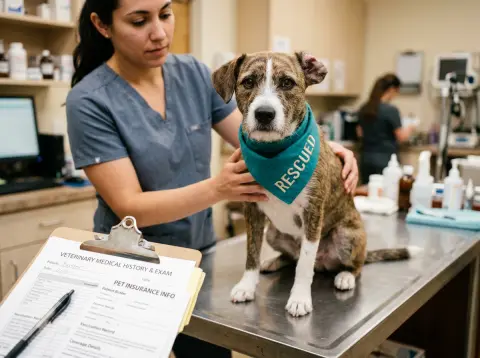
Scheduling a vet visit within the first few days of adoption is non-negotiable. This establishes a baseline of health and provides a clear record of any existing conditions. This initial check-up is also when you should discuss your dog's history with the vet and use that information to inform your insurance choices. You'll want a clear bill of health, or at least a documented list of any issues, before you apply for a policy.
Before you even bring your new dog home, make sure to ask your local shelters or rescue organizations these five key questions about their medical history:
- Do you have any past medical records or veterinary notes from before the dog entered your care?
- Are there any known chronic conditions, past injuries, or behavioral issues that have been observed or treated?
- Can you provide a detailed list of all vaccines, deworming, and flea/tick treatments, including dates?
- Has the dog received any behavioral assessments or training while at the shelter?
- Do you offer any temporary post-adoption health coverage or a free initial vet visit? (Some shelters partner with vets for this.)
Getting these answers won't guarantee perfect health, but it will give you a much clearer picture and help you choose the right policy - or decide if you need one at all.
Navigating Behavioral Challenges: What Insurance Might Cover
Many rescue dogs, especially those from difficult backgrounds, come with behavioral challenges. Things like separation anxiety, fear aggression, or reactivity are common. The good news is that some pet insurance plans do offer coverage for behavioral therapy and even prescription medications, but it's not a given. You really need to read the fine print.
For instance, my cat, Luna, one of my two adopted felines, developed stress-induced urinary issues after a move. While her physical health was fine, the vet recommended behavioral modification and a special diet. Thankfully, my insurance covered a portion of the vet-recommended behavioral consultations and even some of her prescription food. This isn't universal, though.
When you're looking at policies, specifically ask about coverage for veterinary-recommended behavioral therapy from certified professionals and whether medication for conditions like anxiety or depression is included. Documentation is essential here. You'll typically need a diagnosis from a licensed veterinarian, not just an opinion from a trainer, for the insurance to consider coverage. Look for policies that don't consider behavioral issues to be pre-existing if they manifest after your waiting period and initial vet exam. Some might have caps on behavioral coverage, so be aware of those limits too.
Is Self-Insuring a Smarter Option for You?
While I generally lean towards recommending pet insurance, it's not the only path. Some people, especially those who have a significant emergency fund readily available, might consider "self-insuring." This means you set aside a dedicated amount of money - say, $5,000 to $10,000 - specifically for your dog's potential medical emergencies. You pay your dog's vet bills out of this fund instead of paying monthly premiums to an insurance company.
The argument for self-insuring is simple: you have complete control over your money, and you don't pay premiums that you might never "use." The average accident and illness policy for dogs costs around $500 per year, according to the North American Pet Health Insurance Association (NAPHIA). Over 10 years, that's $5,000. If your dog has minimal health issues, you could potentially save that money. However, the risk is real: what if your dog needs a $7,000 surgery in year two? Could you access that money immediately without financial strain?
Here's a quick comparison to help you think through this:
| Feature | Pet Insurance | Self-Insuring |
|---|---|---|
| Monthly Cost | Predictable premiums (e.g., $30-$70/month) | No premiums, but requires disciplined saving |
| Emergency Access | Reimbursement after deductible (can be quick once processed) | Immediate access to your saved funds |
| Risk Exposure | Low risk for large, unexpected bills beyond deductible/co-pay | High risk if a major bill exceeds your savings |
| Pre-Existing Conditions | Usually excluded | Not an issue, as you cover all costs |
| Peace of Mind | High, knowing major costs are covered | Depends on your savings discipline and comfort with risk |
Honestly, for most people, especially those adopting a rescue dog whose health history might be a bit of a mystery, pet insurance offers a peace of mind that's hard to quantify. It means you can make medical decisions based on what's best for your dog, not just what you can afford at that exact moment. I've seen too many families at the shelter agonizing over vet bills they simply couldn't manage, leading to heartbreaking choices. Insurance helps prevent that.
Ultimately, the decision to get pet insurance for your rescue dog comes down to your personal finances, your risk tolerance, and your dog's specific needs. Do your research, talk to your vet, and compare policies carefully. Consider your budget, the typical vet costs in your area, and the potential for unexpected health issues. Then, make an informed choice that feels right for you and your new dog.