Potty Train a Puppy in an Apartment With No Yard
Potty training a puppy when you live in an apartment without a yard can feel like an impossible puzzle, especially if you're picturing endless trips down several flights of stairs or a mad dash to the nearest patch of grass. Believe me, I get it. My first adopted dog, a scruffy terrier mix named Biscuit, joined me in a third-floor walk-up, and we figured it out together. The good news is, it's completely doable with patience, consistency, and a few smart strategies tailored to apartment living. You can teach your little one where to go and avoid accidents inside.
Establishing a Solid Potty Routine in Your Apartment
Building a reliable potty routine is the absolute cornerstone of success for dogs for adoption, no matter where you live. This means taking your puppy out frequently and consistently, especially after key events. Think of it like this: an 8-week-old puppy can generally hold their bladder for about two hours, increasing by one hour for every month of age. A small puppy needs to go out a lot.
Immediately after waking up, within 5-10 minutes of eating or drinking, and after any play session, your puppy will need to relieve themselves. Before bedtime is also a must. I recommend setting a timer on your phone for every 1-2 hours initially, even if you think your puppy might not need to go. It’s better to be proactive than reactive. Over time, you’ll learn your puppy's tells - sniffing around, circling, or heading for a specific spot - and can extend the time between breaks.
Consistency is more important than perfect timing. Try to feed your puppy at the same times each day, and take them out shortly after. This predictability helps their little bodies learn a schedule. For my adopted German Shepherd, Luna, who came to me as a timid 4-month-old from a local shelter, establishing this rigid routine was critical for building trust and helping her feel secure in her new environment. She’d never known a consistent home before, so the routine was her anchor.
Crafting Your Apartment Potty Training Schedule
A structured schedule helps you and your puppy stay on track. This isn't just about potty breaks; it's about integrating meals, play, and rest.
| Time | Activity | Notes for Apartment Living |
|---|---|---|
| 6:00 AM | Wake up, immediate potty break | Quick trip outside, no lingering. Focus on business. |
| 6:15 AM | Breakfast | Feed in designated area. |
| 6:30 AM | Potty break | Another quick trip right after eating. |
| 6:45 AM - 7:45 AM | Play and training, then nap in crate/playpen | Indoor games, puzzle toys. Supervise closely when awake. |
| 7:45 AM | Potty break | Immediately after waking from nap. |
| 12:00 PM | Potty break, Lunch | Mid-day break. |
| 12:15 PM | Potty break | After lunch. |
| 12:30 PM - 5:00 PM | Play, short training sessions, naps | More frequent potty breaks during active periods (every 1-2 hours). |
| 5:00 PM | Potty break, Dinner | Evening routine begins. |
| 5:15 PM | Potty break | After dinner. |
| 5:30 PM - 9:30 PM | Play, quiet time, short walks | Last water intake about 2.5 hours before bedtime. |
| 9:30 PM | Last potty break | A longer walk if possible, or a final quick trip. |
| 10:00 PM | Bedtime (crate) | Puppies can comfortably sleep for about seven hours without a bathroom break. |
Modifying this schedule to fit your lifestyle is important, but try to keep the core structure. A puppy needs consistency, and they need to know what to expect.
Apartment-Specific Potty Solutions and Managing Accidents
When you don't have a yard, you need to consider indoor potty solutions, at least for the early stages, especially if your puppy hasn't completed their vaccinations. Puppy pads are a common choice, but I have strong opinions on them. They can be a good emergency option, but they can also confuse a puppy, making them think it's okay to go inside.
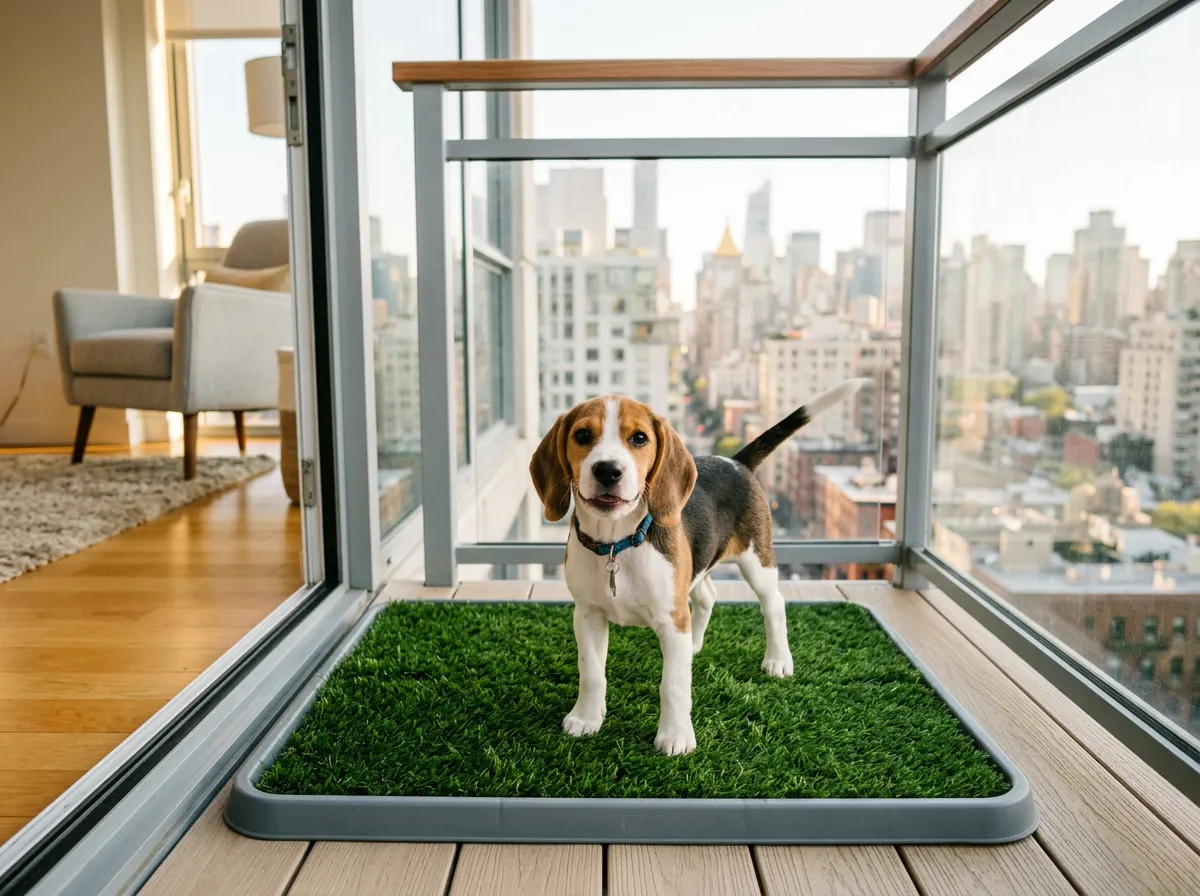
Honestly, I prefer artificial grass patches or even real grass patches for balconies or indoor spaces over traditional puppy pads. They offer a more tactile experience that mimics real grass, making the transition to outdoor potty breaks smoother later on. Look for brands that are easy to clean and have good drainage. Some even offer subscription services for fresh grass delivery. If you use an indoor solution, always place it in a consistent spot, away from their eating and sleeping areas.
Supervision is your most powerful tool. Keep your puppy on a leash attached to you or confine them to a playpen or a properly sized crate when you can't actively watch them. A crate should be just big enough for them to stand up, turn around, and lie down comfortably. If it's too large, they might potty in one corner and sleep in another. My rescue, a scared little Chihuahua mix, spent her first few weeks in a crate whenever I couldn't supervise, and it worked wonders for her potty training and sense of security.
When accidents happen - and they will, don't worry - clean them immediately with an enzymatic cleaner like Nature's Miracle. This breaks down the odor-causing bacteria, preventing your puppy from being drawn back to the same spot. Punishing a puppy for an accident only teaches them to hide their pottying from you, which makes training harder. Just clean it up, and recommit to your routine.
Navigating Public Spaces and Neighborly Relations
Taking a puppy outside in an apartment building comes with its own set of challenges, from elevator waits to shared hallways and common areas. First, always have your puppy on a leash and be ready to pick them up if needed. Many buildings have specific rules about where pets can and cannot relieve themselves. Respect these rules.
Consider the elevator journey. For a young puppy, a several-minute elevator ride can be an eternity. If you live on a higher floor, you might need to carry your puppy down the stairs for a quicker exit, especially for those urgent early morning trips. My advice? Get dressed for success – slip-on shoes and a coat for quick dashes. You will look a little crazy running out the door at 6 AM in your pajamas, but your puppy will thank you.
Be a considerate neighbor. Always carry poop bags and clean up immediately and thoroughly. If an accident happens in a common hallway, clean it up quickly and discreetly. A small spray bottle of enzymatic cleaner can be a lifesaver for these moments. A quick, polite apology if someone sees you, along with your diligent cleanup, goes a long way. Most people understand that puppies are learning, but no one wants to step in a mess.
For puppies who haven't had all their core vaccines (like DHPP and rabies), outdoor potty breaks in public areas can be a concern due to potential exposure to diseases like parvovirus. Talk to your vet about safe potty spots. Often, a designated patch of grass away from high-traffic dog areas, or even a personal grass patch on your balcony, is the best option until they are fully vaccinated.
Enrichment and Mental Stimulation for Apartment Pups
Keeping an apartment puppy happy and accident-free isn't just about potty breaks; it's about meeting their mental and physical needs within a smaller space. A bored puppy is a destructive puppy, and often, a puppy who has accidents out of frustration or lack of stimulation.
Think beyond just walks. Indoor games like fetch (if you have space), hide-and-seek with treats, or flirt poles can burn energy effectively. Puzzle toys, such as Kongs filled with peanut butter or kibble, snuffle mats, and treat-dispensing toys like the KONG Wobbler, are fantastic for mental stimulation. These toys make your puppy "work" for their food, engaging their brains and tiring them out. A tired puppy is a good puppy, and less likely to have accidents indoors.
Short, frequent training sessions also make a big difference. Teaching basic commands like sit, stay, and come not only builds a stronger bond but also provides mental exercise. Even a few five-minute sessions throughout the day can be effective. This is especially true for adopted dog breeds who might need to learn new cues or build confidence.
Remember, a yard isn't the only way to provide exercise. My high-energy Border Collie mix, Pip, thrives on structured walks, mental games, and consistent training, all within my apartment and the local park. We don't have a yard, but we have a routine that keeps his brain busy and his body moving. The goal is quality of engagement, not just quantity of space.
Building Trust and Success with Your Adopted Apartment Puppy
Adopting a puppy, especially one from a shelter, adds another layer to the potty training journey. Many adopted puppies, regardless of breeds, might have unknown histories or come from environments where consistent potty training wasn't a priority. They might be a bit older than the typical 8-week-old puppy, or they might have had accidents in their kennels. This means you need extra patience and understanding.
Focus on creating a safe, predictable environment. Your consistency will be key to helping them feel secure and learn the new rules of your home. Use positive reinforcement exclusively - praise, treats, and happy words when they potty in the right spot. Avoid scolding or punishment, which can damage their trust in you and make them fearful.
Some adopted puppies might arrive with pre-existing anxieties or fears, which can impact their potty training. If your puppy is hesitant to go outside, seems scared of certain noises, or struggles with holding their bladder, consult your vet. They can rule out medical issues and offer behavior modification advice. A good vet is your partner in this journey.
Ultimately, potty training a puppy in an apartment with no yard is a marathon, not a sprint. There will be setbacks, frustrations, and moments when you question everything. But with a solid routine, appropriate tools, constant supervision, and a whole lot of love, you and your puppy will get there.
Start today by planning your puppy's routine, identifying your designated outdoor potty spots, and stocking up on those essential enzymatic cleaners.