Rescue Dog Aggressive Toward Other Dogs: Fix It
I still remember Milo, a scruffy terrier mix at the Boston Animal Care and Control back in 2019, who would transform into a snarling, lunging beast the moment another dog walked past his kennel.
He wasn't vicious with people, quite the opposite, but his dog-on-dog reactivity made him seem almost unadoptable. This kind of aggression, especially in rescue dogs, is heartbreakingly common and often misunderstood, leading many adopters to feel overwhelmed and alone.
Understanding Why Your Rescue Dog Is Aggressive Toward Other Dogs
Aggression in rescue dogs often stems from a complex mix of past experiences, a serious lack of early socialization, deep-seated fear, or sometimes even genetic predispositions, rather than a single, simple cause.
You might assume any reactive rescue dog aggressive toward other dogs must have suffered abuse, but that's not always the case. Some dogs simply missed critical socialization windows as puppies, meaning they never learned appropriate canine social cues. Others might have experienced overwhelming fear in past dog interactions, leading them to believe offense is the best defense.
Many behaviors labeled "aggression" are actually fear-based. A dog who growls, barks, or lunges might be trying to make the scary thing (the other dog) go away. Resource guarding-protecting food, toys, or even their human-can also appear as aggression. Medical issues, like undiagnosed pain, thyroid imbalances, or neurological problems, can also trigger sudden behavioral changes, so always rule out health concerns with your veterinarian first.
When you adopt from a local shelter, ask about the dog's "social history" and how they behaved around other dogs during their stay. Responsible shelters often conduct dog-to-dog introductions and observe behavior in playgroups, but sometimes a dog's true reactivity only emerges once they settle into a home environment.
Immediate Management Strategies to Keep Everyone Safe
Safety is the absolute top priority when dealing with a rescue dog aggressive toward other dogs, so immediate management involves preventing unwanted interactions, controlling their environment, and using appropriate tools to keep your dog and others out of harm's way.
This means no off-leash park visits, no unsupervised greetings, and careful planning for every walk. If you see another dog approaching, increase distance, cross the street, or use a "U-turn" cue to change direction. Your dog should never be in a situation where they feel the need to escalate their behavior.
Consider using a basket muzzle, like the Baskerville Ultra Muzzle, during walks or in situations where you might encounter other dogs. This isn't a punishment; it's a safety tool that allows your dog to pant, drink, and even take treats, all while preventing bites. Pairing muzzle wear with positive experiences-treats, walks, praise-can help your dog associate it with good things.
At home, create safe spaces using gates or crates. If you have other dogs, introductions must be slow and controlled, often starting with parallel walks on neutral territory and only allowing brief, supervised interactions through a barrier. Never force an interaction, and always be prepared to separate them immediately.
Training Your Reactive Rescue Dog: A Step-by-Step Approach
Effective training for a rescue dog aggressive toward other dogs focuses on counter-conditioning and desensitization, teaching your dog to associate other dogs with positive, rewarding experiences, all while carefully staying below their reaction threshold.
The goal isn't necessarily for your dog to love every other dog, but to tolerate their presence calmly. Start by identifying your dog's "threshold"-the distance at which they first notice another dog without reacting (no staring, stiffening, growling). This might be 50 feet, 100 feet, or even further.
At this safe distance, expose your dog to another calm, neutral dog. The moment your dog spots the other dog, immediately give them a high-value treat (cooked chicken, cheese, hot dogs). The other dog appears, delicious food appears. The other dog disappears, the food disappears. Repeat this over many sessions, gradually reducing the distance as your dog consistently remains calm. This is called "Look at That" or LAT training.
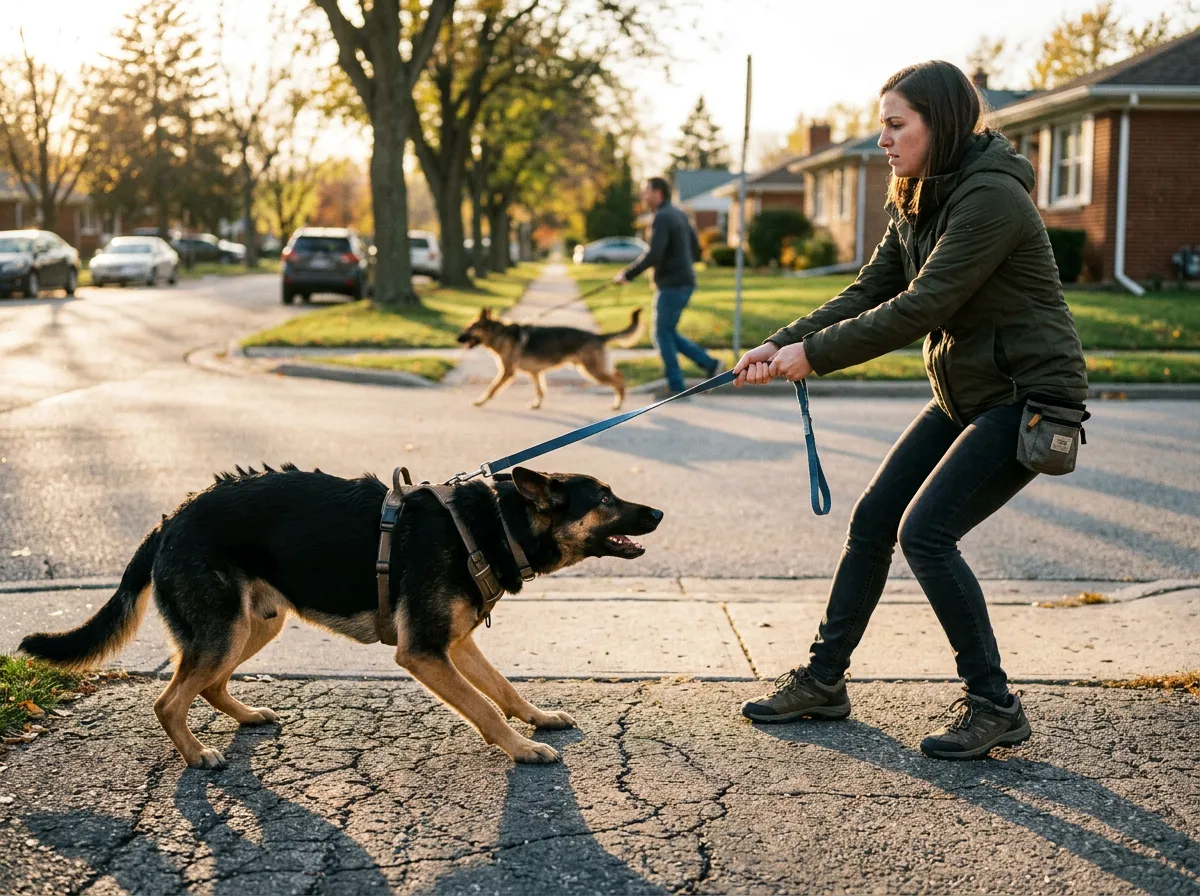
I learned this the hard way with Shadow, a German Shepherd mix I adopted in Nashville, TN, in 2020. He was leash-reactive towards other dogs, lunging and barking fiercely. We spent nearly six months doing nothing but parallel walks with a friend's calm Labrador, starting at opposite ends of a large park. Slowly, over weeks, we'd shorten the distance by a few feet. Now, he can walk past most dogs on a loose leash, a huge victory.
Here is a general roadmap for integration, especially if you have other dogs at home:
- Month 1: Strict Separation and Parallel Walks. Keep the reactive dog entirely separate from resident dogs indoors. Use gates, crates, and rotate their access to common areas. Start parallel walks outdoors, with both dogs on leash and at a significant distance where neither reacts. No direct eye contact, no forced introductions.
- Month 2-3: Scent and Sight Introductions. Allow dogs to sniff each other's bedding or toys through a barrier. Continue parallel walks, gradually decreasing distance if both dogs remain calm. Introduce brief, controlled visual exposures through a sturdy baby gate, always ending positively with treats.
- Month 4-6: Supervised Interactions. If previous steps are successful, begin very short (1-2 minute) on-leash "meet and greets" in a neutral, secure area. Have two handlers, one for each dog. Keep leashes loose, reward calm behavior, and immediately separate if tension arises. Never leave them unsupervised.
When to Call in the Professionals and What to Expect
If you are struggling to make consistent progress on your own, or if you ever feel unsafe managing your rescue dog aggressive toward other dogs, seeking help from a certified professional dog trainer or a veterinary behaviorist is not just an option-it is crucial.
Look for trainers with certifications like CPDT-KA (Certified Professional Dog Trainer - Knowledge Assessed) or KPA-CTP (Karen Pryor Academy Certified Training Partner). For more severe cases, or if you suspect underlying anxiety or fear, a veterinary behaviorist (DACVB) can prescribe medication in conjunction with behavior modification, which can significantly help reduce stress and improve learning.
An initial consultation with a good trainer or behaviorist typically lasts 1-2 hours and can cost anywhere from $150 to $300. They will assess your dog's behavior, observe interactions, and develop a customized training plan. Expect follow-up sessions, which are essential for guidance and adjustments.
This is where the reality of pet ownership can become heartbreaking. Despite best intentions, dedicated effort, and significant financial investment, some dogs' aggression is simply too severe or deeply ingrained for the average home to manage safely. This isn't a failure on the owner's part, but a sad reality of complex behavioral issues, often leading to difficult decisions and, unfortunately, a return to local shelters or specialized foster care. It highlights the immense pressure shelters face and the difficult choices families sometimes have to make for the safety of everyone involved.
Living with a Reactive Dog: Long-Term Commitment and Support
Managing a reactive dog is almost always a long-term commitment that demands immense patience, unwavering consistency, and a strong support system, but it can ultimately lead to a deeply rewarding and unique bond.
You will likely need to make lifestyle adjustments. This might mean avoiding dog parks, choosing less busy walking routes, or scheduling playdates only with known, calm dogs. It means always being vigilant and proactive, rather than reactive, to potential triggers.
Find a community of like-minded owners. Online forums, local training groups, or even just a supportive friend who understands the challenges can make a world of difference. Knowing you are not alone in this journey is validating.
Remember to celebrate every small victory-a walk without a reaction, a moment of calm when another dog passes, a successful, brief interaction. These moments build trust between you and your dog and reinforce that your efforts are making a difference.
This journey tests your patience, but also deepens your understanding of canine behavior.
What unexpected joys might you discover along the way?