Rescue Dog Scared of Men: Why and How to Help
Do you expect a rescue dog, previously living on the streets or in an abusive home, to simply "get over" their past trauma just because you've offered them a soft bed and a full bowl?
Often, their past casts a long shadow, especially when it comes to specific fears.
Understanding Why Your Rescue Dog Scared of Men
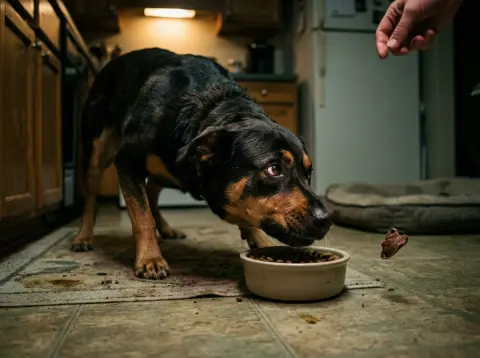
A rescue dog scared of men isn't being stubborn or difficult; they are reacting to deep-seated fears stemming from past experiences, lack of socialization, or even genetic predispositions. Their fear is a survival mechanism, not a personal slight against the men in their life.
Trauma and past experiences often play a significant role. Many dogs in shelters have endured neglect, abuse, or inconsistent handling from men, leading them to associate male figures with negative outcomes. This isn't always overt abuse; simply being yelled at, or having unpredictable interactions, can be enough to create lasting fear.
Lack of early socialization also contributes significantly. Puppies need consistent, positive exposure to a wide variety of people, including men of different ages, sizes, and appearances, during their critical socialization period (roughly 3-16 weeks). Without this exposure, specific fears can develop and become ingrained.
Genetic predisposition can also factor in. Some dog breeds are naturally more wary or sensitive than others. For example, a Chihuahua mix named Peanut I fostered in Portland, Oregon, was terrified of men, especially those wearing hats. She would shake uncontrollably and try to bolt, a reaction we attributed to her being found abandoned in a city park after a harsh winter, likely by someone who wasn't kind. It took a solid six months of careful work before she could even be in the same room as a man without extreme anxiety.
Finally, some dogs simply have a more anxious temperament, regardless of their past. This can make them more susceptible to developing fears, and those fears can become more intense and difficult to manage.
The Myth of "Just Letting Them Figure It Out"
Telling someone to "just let the dog figure it out" or "they'll get used to it eventually" when their rescue dog is scared of men is not just unhelpful- it's dangerous. This approach often exacerbates fear, potentially leading to fear-based aggression, and it completely disregards the dog's emotional state.
Ah, yes, the classic advice: "Just put them in a room with a man and let them work it out! What could go wrong? Maybe the dog will just magically realize men are great, or perhaps it will be a deeply traumatic experience that makes their fear even worse and potentially leads to a bite incident. Who knows? It's all part of the fun of adoption, isn't it?" This "sink or swim" mentality is precisely what you need to avoid.
Forcing interaction backfires because it confirms the dog's worst fears. If a dog is terrified and you push them into a situation they perceive as threatening, their fight-or-flight response kicks in. They might cower, try to escape, or, if those options are unavailable, they might lash out. This doesn't teach them to trust; it teaches them that men are indeed scary and that they need to defend themselves.
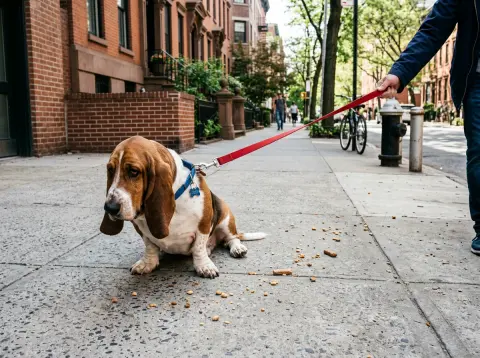
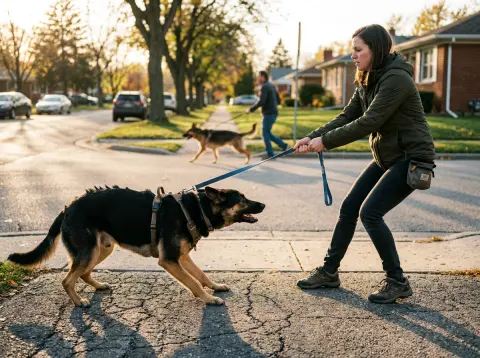
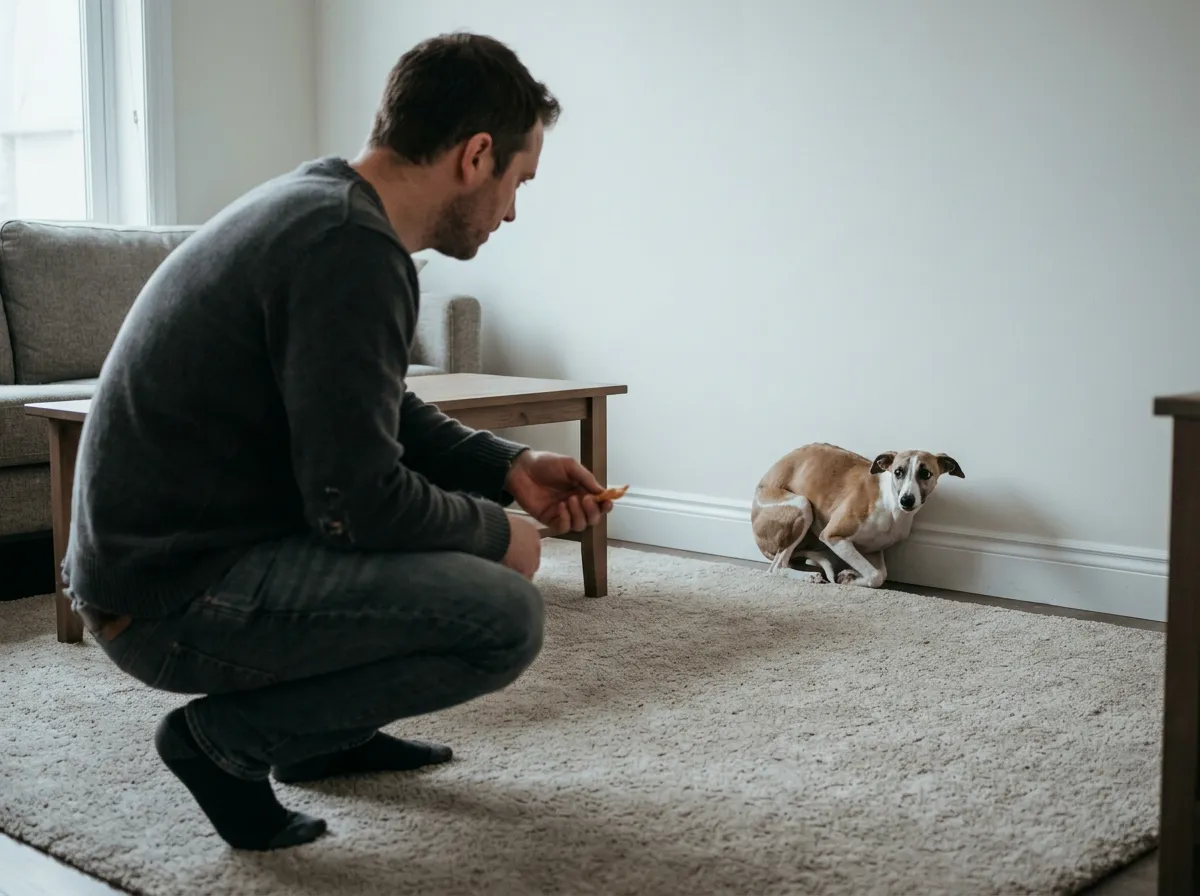
Recognizing the signs of fear versus aggression is crucial here. A fearful dog might tuck their tail, flatten their ears, yawn excessively, lick their lips, or avoid eye contact. If pushed too far, these signs can escalate to growling, snapping, or biting. I once saw a German Shepherd mix named Rex in Sacramento, California, who was so reactive to male visitors that he nipped a guest on the hand, resulting in a minor wound and a $400 vet bill for the bite victim. This was entirely preventable; his owner had been told to "just let him interact" despite his clear signs of distress.
Ignoring these warnings puts both your dog and others at risk. It erodes any trust you're trying to build and can make the problem far more difficult to resolve in the long run.
Practical Steps to Help Your Rescue Dog Overcome Fear of Men
Helping your rescue dog overcome their fear of men requires immense patience, consistency, and a commitment to positive reinforcement, desensitization, and counter-conditioning. The goal isn't to force affection, but to help your dog feel safe and neutral in the presence of men.
Create a Safe Space
Begin by ensuring your dog has a designated safe space where they can retreat and feel secure, away from any perceived threats. This could be a crate covered with a blanket, a quiet room, or a specific dog bed in a low-traffic area. Using calming aids like an Adaptil diffuser or vet-approved calming treats (such as Zesty Paws Calming Bites) can also help reduce overall anxiety levels in their environment.
Controlled, Positive Introductions
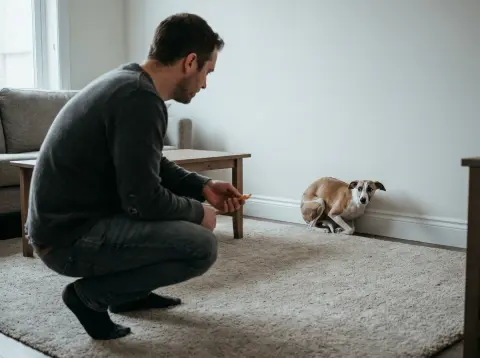
When introducing your dog to men, control the environment completely. Start with the man being far enough away that your dog notices him but doesn't react negatively. This is often called the "look and leave" method. As soon as your dog looks at the man, even for a second, immediately reward them with high-value treats (think boiled chicken, cheese, or a stuffed Kong with peanut butter). The man should avoid direct eye contact, approaching directly, or reaching over the dog. Instead, he should turn sideways, avoid staring, and perhaps toss treats towards the dog without forcing interaction.
Gradually, over days or weeks, decrease the distance as your dog shows comfort. The key is to never push your dog past their comfort threshold. If they show any signs of fear, you've moved too quickly. Retreat to a distance where they are relaxed and try again. Clicker training can be effective here; the click marks the exact moment they are doing something good (like looking calmly at a man), followed immediately by a reward.
Seek Professional Help
For severe fears or any signs of aggression, working with a certified professional dog trainer or a veterinary behaviorist is non-negotiable. Organizations like the Certification Council for Professional Dog Trainers (CCPDT) or the American College of Veterinary Behaviorists (ACVB) can help you find qualified experts in your area. They can assess your dog's specific triggers, create a tailored behavior modification plan, and guide you through the process safely and effectively. This is not a sign of failure; it's a responsible step towards your dog's well-being and everyone's safety.
Long-Term Management and Patience with Your Rescue Dog Scared of Men
Addressing a rescue dog's fear of men is a marathon, not a sprint, demanding consistent effort and a deep understanding of your dog's individual needs. There will be good days and bad days, and setbacks are a normal part of the process.
Consistency is key in this journey. Every interaction with a man, whether planned or accidental, should be managed with positive reinforcement in mind. This means educating family members and guests on how to interact with your dog, avoiding situations that overwhelm your dog, and always having those high-value treats ready.
Managing expectations is also vital. Some dogs may never become completely comfortable with all men. Your goal should be to help them feel safe and neutral, rather than forcing them to be outwardly affectionate. A Labrador Retriever I knew, named Buster, adopted from a local shelter in Atlanta, Georgia, was shy around men for years. While he eventually tolerated male visitors, he always preferred to greet women. His owner accepted this, focusing on making Buster feel secure and respected.
Continued positive reinforcement for calm behavior around men, even at a distance, is crucial. If fear-aggression is a risk, consider muzzle training with a comfortable muzzle like a Baskerville Ultra Muzzle. This provides a safety net while you continue behavior modification, ensuring everyone, including your dog, remains safe.
Helping a fearful rescue dog takes time, but it is deeply rewarding.