Why Does My Cat Throw Up After Eating? Causes
Roughly 1 in 3 cats will vomit at least once a month, according to some veterinary surveys, and when it happens right after eating, it can be particularly alarming for pet parents. As a veterinarian who has spent years working with local shelters and rescue organizations, I can tell you that while it's distressing to witness, not every episode is an emergency.
Still, understanding the "why" behind your cat throwing up after eating is crucial for their long-term health and your peace of mind.
Why Does My Cat Throw Up Right After Eating? The Most Common Reasons
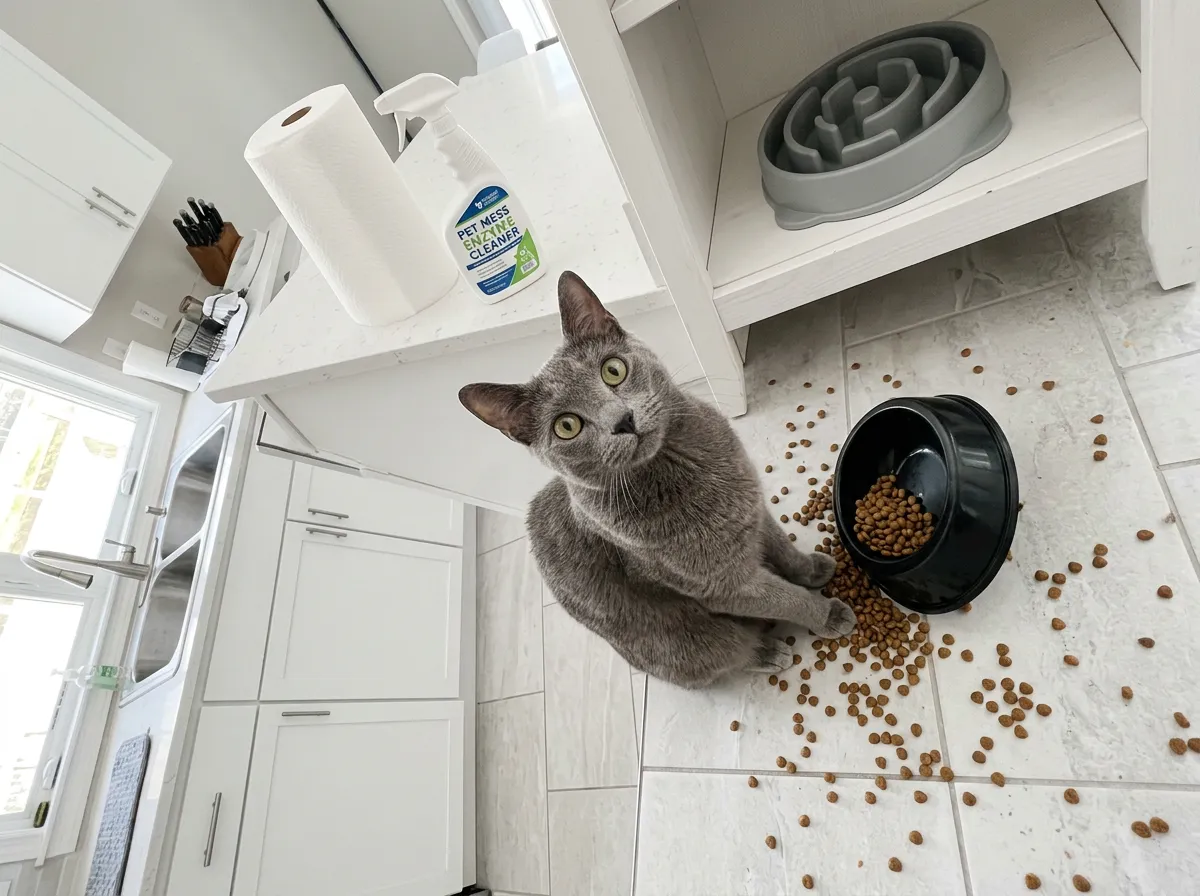
Most often, a cat throwing up right after eating is due to them eating too quickly, a sudden change in diet, or the presence of hairballs. These are typically less serious causes, often resulting in regurgitation of undigested food rather than true vomiting, which involves more abdominal effort.
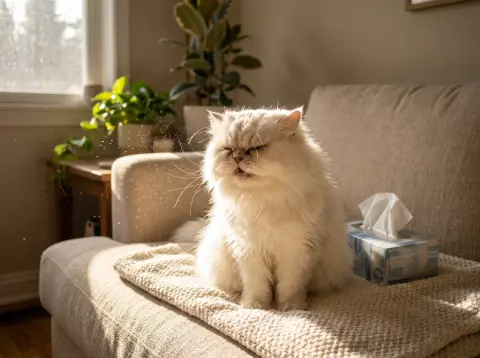
Let's be clear: there's a difference between regurgitation and vomiting. Regurgitation is a passive expulsion of undigested food, often tubular in shape, that comes up without much effort. Vomiting, on the other hand, involves active abdominal contractions, retching, and usually brings up partially digested food or bile. If you see your cat hunching over, gagging, and really straining, that's vomiting. If food just appears on the floor a few minutes after they've eaten, that's more likely regurgitation.
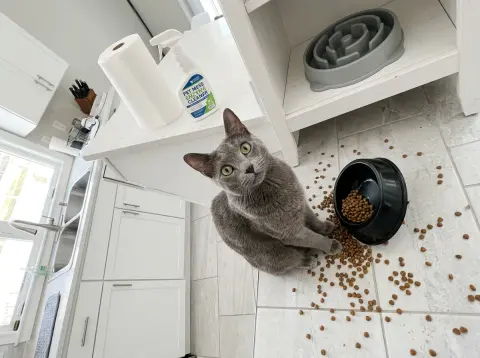
One of the top culprits for immediate post-meal expulsion is simply eating too fast. This happens a lot with cats who've experienced food insecurity or competition in their past, common in shelter environments. They gulp down their food, swallowing excess air, and their stomach quickly becomes distended. The body's natural response is to empty the stomach to relieve the pressure. Another frequent cause is hairballs; ingested fur accumulates in the stomach and, particularly after a meal, can trigger a reflex to expel it. And, of course, sudden diet changes without a gradual transition can upset a cat's delicate digestive system, leading to gastric irritation and subsequent vomiting. The American Veterinary Medical Association (AVMA) consistently emphasizes gradual transitions for all dietary changes.
How Does Adoption Stress Affect a Cat's Digestion and Lead to Vomiting?
Adoption stress significantly impacts a cat's digestion and can directly contribute to post-meal vomiting, particularly in the first few weeks or months in a new home. The unfamiliar environment, new routines, and adjusting to new housemates can create a level of anxiety that manifests physically, often at mealtime.
I've seen this countless times. A cat coming from a shelter, where food might have been a competitive resource, often develops a habit of eating at warp speed. This isn't necessarily about hunger in their new, food-secure home, but a learned behavior from their past. The psychological stress of adapting to a new environment can also lead to physiological changes, including altered gut motility and increased gastric sensitivity. I remember Smudge, a beautiful Maine Coon adopted from a St. Louis shelter in 2022. His new owners were distraught because he would consistently throw up his entire meal within minutes. After a $300 diagnostic workup showed no underlying medical issues, we determined it was acute gastritis brought on by rapid eating and the stress of his new home. We implemented slow-feeder bowls and created a quiet, secluded feeding area, and within a month, Smudge was eating calmly and keeping his food down.
Creating a calm, predictable feeding environment is paramount for newly adopted cats for adoption. Place their food bowl in a quiet corner away from high-traffic areas, other pets, or loud noises. For cats with a history of food insecurity, using a slow-feeder bowl or a puzzle feeder can be a game-changer. These tools force them to eat more slowly, reducing air intake and stomach distension. We often use these in shelters for cats prone to rapid eating, and it's a simple, effective strategy that translates well to a home environment.
What Medical Conditions Cause a Cat to Vomit After Meals?
While often benign, a cat throwing up after eating can also be a symptom of more serious underlying medical conditions, ranging from inflammatory bowel disease to hyperthyroidism or even parasitic infections. It's crucial not to dismiss frequent or severe vomiting, especially if accompanied by other concerning symptoms.
Beyond the common issues, several medical conditions can present with post-meal vomiting. Inflammatory Bowel Disease (IBD) is a chronic condition where the gastrointestinal tract becomes inflamed, leading to vomiting, diarrhea, and weight loss. Gastritis, an inflammation of the stomach lining, can be acute (like Smudge's case) or chronic, caused by dietary indiscretion, toxins, or other underlying illnesses. Pancreatitis, inflammation of the pancreas, is another serious condition that can cause vomiting, abdominal pain, and lethargy. Cats with hyperthyroidism - an overactive thyroid gland - often have an increased appetite but still lose weight and may vomit due to metabolic disturbances. Even parasites, like roundworms or tapeworms, can irritate the digestive tract and trigger vomiting, particularly after a meal when the gut is active. Foreign objects, like string or small toys, can also cause blockages or irritation, leading to vomiting.
If your cat's vomiting is persistent, severe, or accompanied by other signs like lethargy, loss of appetite, diarrhea, blood in the vomit, or weight loss, a veterinary visit is necessary. Your vet will conduct a thorough physical exam and may recommend diagnostics such as blood work, fecal tests for parasites, X-rays, or ultrasound to pinpoint the exact cause.
When Should I Worry About My Cat Throwing Up After Eating and Call the Vet?
You should worry about your cat throwing up after eating and contact your veterinarian immediately if the vomiting is frequent (more than once an hour), contains blood, is accompanied by lethargy, loss of appetite, abdominal pain, or if your cat seems to be in distress. Occasional, isolated incidents of regurgitation might not be an emergency, but consistent vomiting warrants professional attention.
Here's what most people get wrong: they wait. Cats are masters at hiding illness, so by the time they show obvious symptoms, the underlying issue might be quite advanced. Cats often vomit once or twice when they have a hairball or food allergy, and this is usually not an emergency. But if your cat is vomiting more than once an hour, it could be due to something more serious like pancreatitis (inflammation of the pancreas), an obstruction, or severe systemic illness. Additionally, if your cat can't keep water down, they risk rapid dehydration, which can quickly become life-threatening. Look for signs of dehydration such as tacky gums, sunken eyes, and reduced skin elasticity (when you gently tent the skin over their shoulders, it should spring back immediately).
Consider the "seven-day rule" for food transitions: mix increasing amounts of the new food with decreasing amounts of the old food over a seven-day period to avoid discomfort. If you've been following this protocol and your cat is still vomiting, that's a red flag. If your cat is acting otherwise normal - eating, drinking, playing, and having normal bowel movements - and the vomiting is infrequent and resolves quickly, you might be able to monitor them at home after consulting with your vet. However, any deviation from their normal behavior alongside vomiting should prompt a call to your veterinary clinic without delay.
What Can I Do to Prevent My Cat From Vomiting After Eating?
To prevent your cat from vomiting after eating, you can implement several strategies, including feeding smaller, more frequent meals, using slow-feeder bowls, ensuring a calm feeding environment, and transitioning foods gradually. Addressing hairball issues and considering a novel protein diet can also be beneficial.
First, consider meal frequency and size. Instead of two large meals, try offering three to four smaller meals throughout the day. This reduces the volume of food in the stomach at any one time, lessening the chance of distension and rapid expulsion. Slow-feeder bowls, as mentioned, are excellent for gulp-prone cats. You can also spread kibble on a flat baking sheet or use interactive puzzle toys to slow down eating. These strategies also provide mental enrichment, which is a bonus for indoor cats.
Next, evaluate their diet. Is it a high-quality, easily digestible food? Some cats have sensitivities to common ingredients like chicken, beef, or grains. I often recommend trying a novel protein diet, like one with duck or venison, or a hydrolyzed protein diet (where proteins are broken down into tiny components less likely to trigger an immune response) for cats with suspected food allergies. Brands like Royal Canin Veterinary Diet or Hill's Science Diet offer excellent prescription diets for sensitive stomachs. Whiskers, a Domestic Shorthair I worked with in Louisville back in 2023, suffered from chronic post-meal vomiting until his owner switched him to a hydrolyzed protein diet following my advice and stuck to the 7-day transition protocol. It made all the difference.
Make sure your cat has constant access to fresh water. Dehydration can exacerbate gastrointestinal issues. Also, address hairball prevention proactively with regular grooming and specific hairball control diets or supplements, if needed. The goal is to minimize the amount of fur ingested. And finally, if you've done all of this and your cat still throws up after eating, it's time for a comprehensive veterinary workup to rule out those more serious underlying medical conditions. Don't just keep trying home remedies if the problem persists; that's how serious issues get missed.
How much more comfortable will you feel once you understand your cat's digestive health?