Why Is My Cat Sneezing So Much? Common Causes
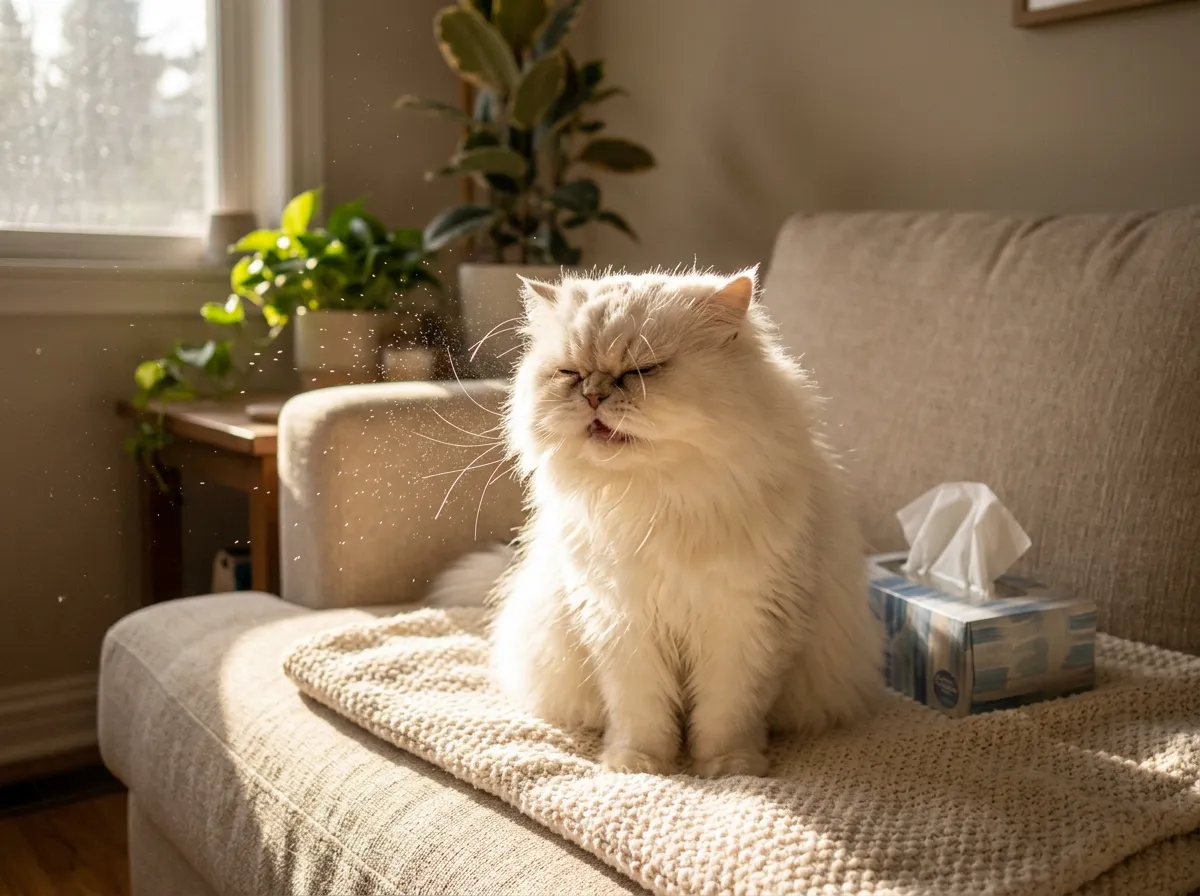
If your cat is suddenly sneezing a lot, it's easy to jump to conclusions, but here's the uncomfortable truth: you probably have a lot more to worry about than a simple allergy. While environmental irritants can certainly play a role, persistent cat sneezing often signals underlying issues, especially a lurking feline upper respiratory infection, and ignoring it means ignoring a potential health problem that can escalate quickly.
Why Does My Newly Adopted Cat Sneeze So Much?
Newly adopted cats often sneeze due to the stress of a new environment, which can trigger a flare-up of Feline Herpesvirus (FHV), a highly common and often latent infection in cats. This "welcome home" sneeze is common in shelter cats because the change in surroundings, new smells, and unfamiliar routine create stress that can suppress their immune system, allowing a dormant virus to become active and cause symptoms like sneezing and runny eyes.
Here at the shelter, we see this scenario play out countless times each year. Imagine a cat named Oliver, a sweet Domestic Shorthair we placed in Gainesville, Florida, just last summer. He'd been with us for months, perfectly healthy, but within three days of arriving at his new home, his adopters called, frantic. Oliver was sneezing constantly, had watery eyes, and seemed a bit lethargic. We knew instantly what it was: a stress-induced FHV flare-up. His new parents followed our advice, kept him comfortable, and within a week, he was back to normal, just needing some extra TLC during his adjustment period.
Stress is a sneaky culprit that many new pet parents overlook. It's not just about physical comfort; it's about emotional well-being. A cat leaving the familiarity of a shelter kennel, even a noisy one, for a quiet home still experiences a monumental shift. Their immune system takes a hit. This vulnerability makes them more susceptible to showing symptoms of viruses they've carried asymptomatically for years. The ASPCA estimates that as many as 80-90% of all cats are infected with Feline Herpesvirus, meaning most cats have the potential for these flare-ups under stress.
Another factor is exposure to new pathogens. While we meticulously vaccinate and monitor our cats, a new home introduces them to different environmental bacteria and viruses that their immune system hasn't encountered yet. Sometimes, it's a mild, temporary reaction as their body builds immunity, but combined with stress, it can present as a full-blown URI. This is why a calm, quiet introduction to a new home is not just a recommendation; it's a critical health measure.
What Are the Common Causes of Cat Sneezing?
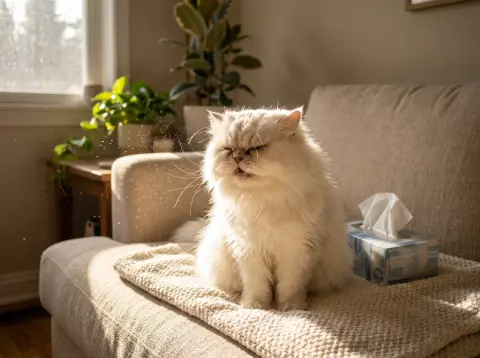
Common causes of cat sneezing primarily include upper respiratory infections (URIs), environmental irritants, and less frequently, foreign objects or dental issues. URIs, often viral like Feline Herpesvirus (FHV) or Feline Calicivirus (FCV), are the most frequent culprits, presenting with symptoms such as nasal discharge, watery eyes, and sometimes fever. Environmental irritants, ranging from dust and pollen to household cleaners and perfumes, can also trigger sneezing as a protective reflex.
Viral URIs are notoriously prevalent. These are highly contagious, especially in multi-cat environments like shelters. We vaccinate all our cats against common respiratory viruses, including Feline Viral Rhinotracheitis (part of the FVRCP core vaccine, which covers FHV) and Feline Calicivirus, as per AVMA guidelines. Still, vaccines don't always prevent infection, but they significantly reduce the severity of symptoms. An uncomplicated URI typically lasts anywhere from 7 to 21 days, with 7 to 10 days as the average duration.
Environmental irritants are another major factor. Think about it: cats spend a lot of time with their noses close to the ground, sniffing everything. Dusty cat litter is a huge offender; I always recommend unscented, low-dust varieties. Perfumes, air fresheners, cleaning sprays, and even cigarette smoke can irritate their delicate nasal passages, leading to bouts of sneezing. One of the strangest cases I remember involved a Siamese cat in Tucson, Arizona, who would sneeze violently every time their owner used a specific brand of strong-smelling hairspray. It was a classic case of environmental irritation, easily solved by changing products.
Less common but still significant causes include foreign objects lodged in the nasal passages, like a blade of grass or a piece of lint. We've even had cats come in with small seeds stuck up there! Dental disease, particularly infections in the upper teeth, can also spread to the sinuses and cause sneezing. Nasal polyps or tumors are rarer, but if sneezing is persistent, one-sided, or accompanied by bloody discharge, a veterinary visit is essential to rule out these more serious conditions.
Now, let's talk about the absurd advice I often hear. People will say, "Oh, just give them some special herbs," or "Try a diffuser with essential oils; it's all-natural!" This is where I have to bite my tongue. Essential oils, for starters, can be toxic to cats, causing respiratory irritation or worse. And if your cat is sneezing because of a serious bacterial infection, an herbal tea isn't going to cut it. You're wasting precious time and risking your cat's health by listening to unvetted home remedies when a vet visit is clearly needed. Sometimes common sense just isn't that common.
When Should I Worry About My Cat's Sneezing and Seek Veterinary Care?
You should worry about your cat's sneezing and seek veterinary care if it's persistent, severe, or accompanied by other concerning symptoms like lethargy, loss of appetite, difficulty breathing, colored or bloody nasal discharge, or eye discharge and swelling. While occasional sneezes are normal, a sudden increase in frequency or the presence of additional signs of illness warrants a professional evaluation to rule out serious infections or underlying conditions that require specific medical treatment.
Look, a cat will sneeze occasionally, just like people do. Maybe a speck of dust, maybe a change in humidity. That's normal. But if your cat is having sneezing fits multiple times a day, for several days in a row, it's time to pay close attention. Even more so if you observe any of the following: thick yellow or green discharge from the nose or eyes (a sign of bacterial infection), fever (which you might notice as a warm nose or ears, or just general listlessness), coughing, or changes in their breathing pattern (fast, shallow, or labored breathing).
Another critical indicator is a change in behavior or appetite. A sick cat often loses interest in food and water. If your cat isn't eating or drinking for more than 24 hours, that's an emergency, regardless of the sneezing. Dehydration and malnutrition can quickly make a respiratory infection much worse. We had a fluffy Persian named Phoebe, who, because of her flat face, was already prone to minor respiratory congestion. When she started refusing food for two days straight, accompanied by severe sneezing and a very green nasal discharge, her owners in Syracuse, New York, brought her in immediately. It was a severe bacterial infection that needed antibiotics, and thankfully, she recovered fully.
If your cat recently received an intranasal vaccine, they might experience mild sneezing for a few days - no more than several days, usually - as a normal immune response. However, if this sneezing is severe or lasts longer, it's not normal and still requires a vet check. Better safe than sorry when it comes to your cat's health. We always tell adopters to call us or their vet with any concerns; there's no such thing as a "silly" question when it comes to a new pet's well-being.
How Can I Help My Cat Stop Sneezing So Much?
You can help your cat stop sneezing so much by addressing the underlying cause, whether it's through veterinary treatment for infections, reducing environmental irritants, or creating a less stressful home environment. For URIs, a vet might prescribe antibiotics for bacterial infections or recommend supportive care like humidifiers, gentle nasal cleaning, and enticing warmed food to encourage eating. Minimizing dust, strong perfumes, and cigarette smoke in your home are crucial preventative steps.
For URIs, the primary solution is veterinary care. Your vet will diagnose the specific type of infection (viral, bacterial, or fungal) and prescribe appropriate medication. If it's bacterial, antibiotics are essential. For viral infections, supportive care is key. This often includes encouraging fluid intake, ensuring they eat (warmed, smelly food like canned tuna or chicken can help), and keeping their nasal passages clear. A humidifier in the room where your cat rests can help loosen mucus and make breathing easier.
To reduce environmental triggers, start by evaluating your home. Switch to a low-dust, unscented cat litter. Consider an air purifier with a HEPA filter to remove allergens and dust particles from the air. Avoid using aerosol sprays, strong cleaning products, or plug-in air fresheners around your cat. If you smoke, do it outside, far away from your cat. Regularly vacuuming and dusting can also make a significant difference in minimizing irritants.
Managing stress, particularly for newly adopted cats or those with Feline Herpesvirus, is vital. Provide your cat with a safe, quiet space they can retreat to. Maintain a consistent routine for feeding and playtime. Use calming pheromone diffusers, like Feliway, which can help reduce anxiety. For a cat with FHV, your vet might even suggest lysine supplements to help manage flare-ups, though evidence on their effectiveness can be mixed.
This isn't about guesswork; it's about informed action.
After eight years working in shelters, I’ve learned that a cat’s sneeze is rarely just a sneeze - it’s a communication that demands our attention and often, our prompt intervention.