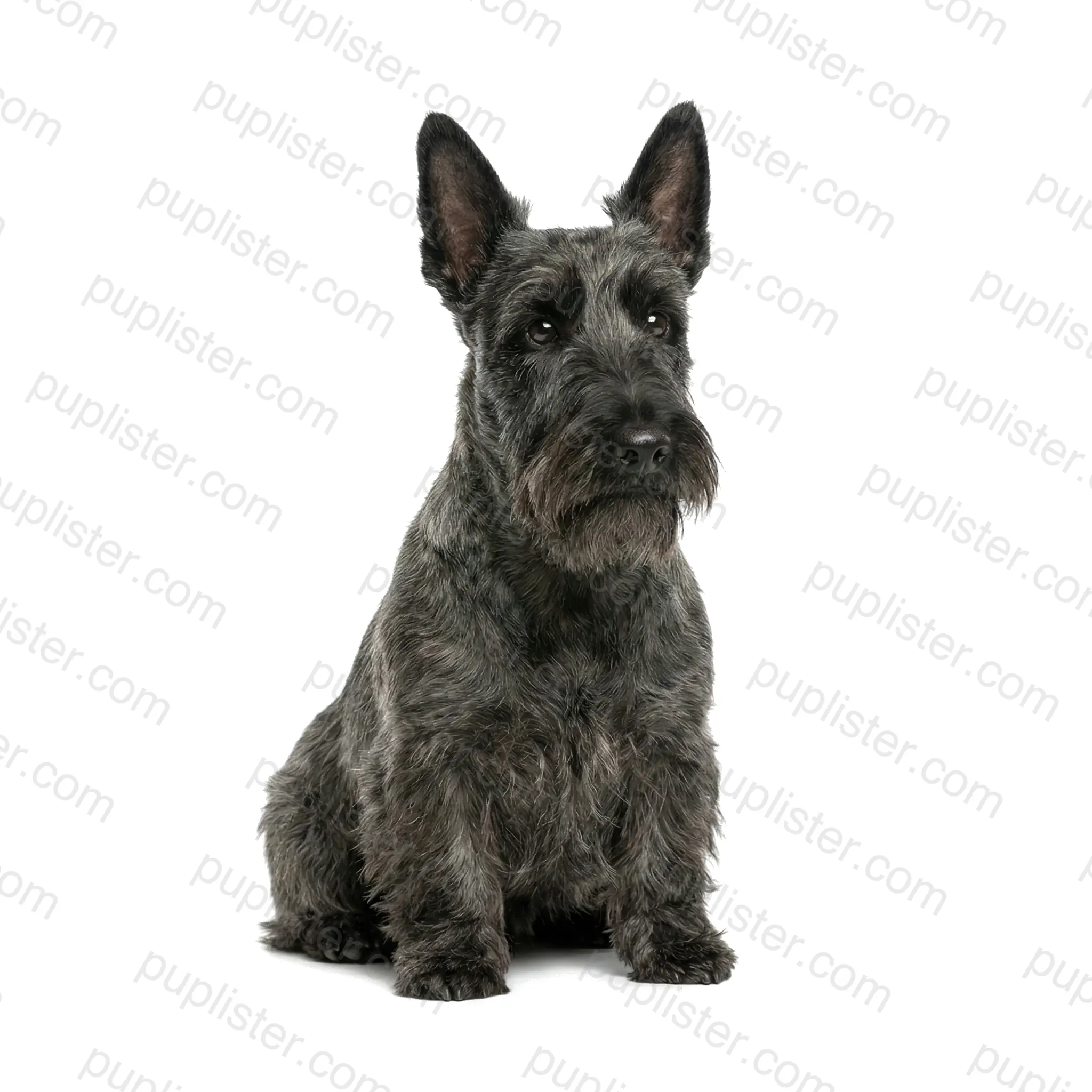
About the Scottish Terrier
The Scottish Terrier — often called the "Scottie" — is one of Scotland's oldest terrier breeds, developed in the Aberdeen area during the 18th and 19th centuries to hunt foxes, badgers, and rats underground. These compact, powerful dogs stand about 10 inches tall and weigh 18 to 22 pounds, with a low center of gravity and surprisingly heavy bone for their size. Their harsh, wiry outer coat and soft, dense undercoat come in black, wheaten, or brindle, and the breed's distinctive profile — long head, erect ears, and bushy eyebrows — is among the most recognizable in dogdom.
Temperament & Personality
Scottish Terriers are independent, dignified, and fiercely loyal to their people — often described as having an "old soul" quality uncommon in the terrier group. They tend to bond most deeply with one or two people and can be reserved or aloof with strangers, making them natural watchdogs. Scotties can be assertive with other dogs, especially those of the same sex, and their strong prey drive means small animals are rarely safe in their presence.
Pros
- Compact and sturdy — well-suited for apartment living with regular exercise
- Low-shedding wiry coat when properly maintained through hand-stripping
- Loyal, devoted companion with a dignified, independent character
- Excellent watchdog — alert and naturally suspicious of strangers
Cons
- Stubbornly independent — training requires patience and creative motivation
- Prone to von Willebrand's disease (a bleeding disorder), Scottie cramp, and bladder cancer
- Can be aggressive toward other dogs, especially unfamiliar ones
- Requires regular professional grooming or hand-stripping every 6 to 8 weeks
The Scottish Terrier's unwavering loyalty and distinctive charm are one of a kind — find your Scottie on Puplister.