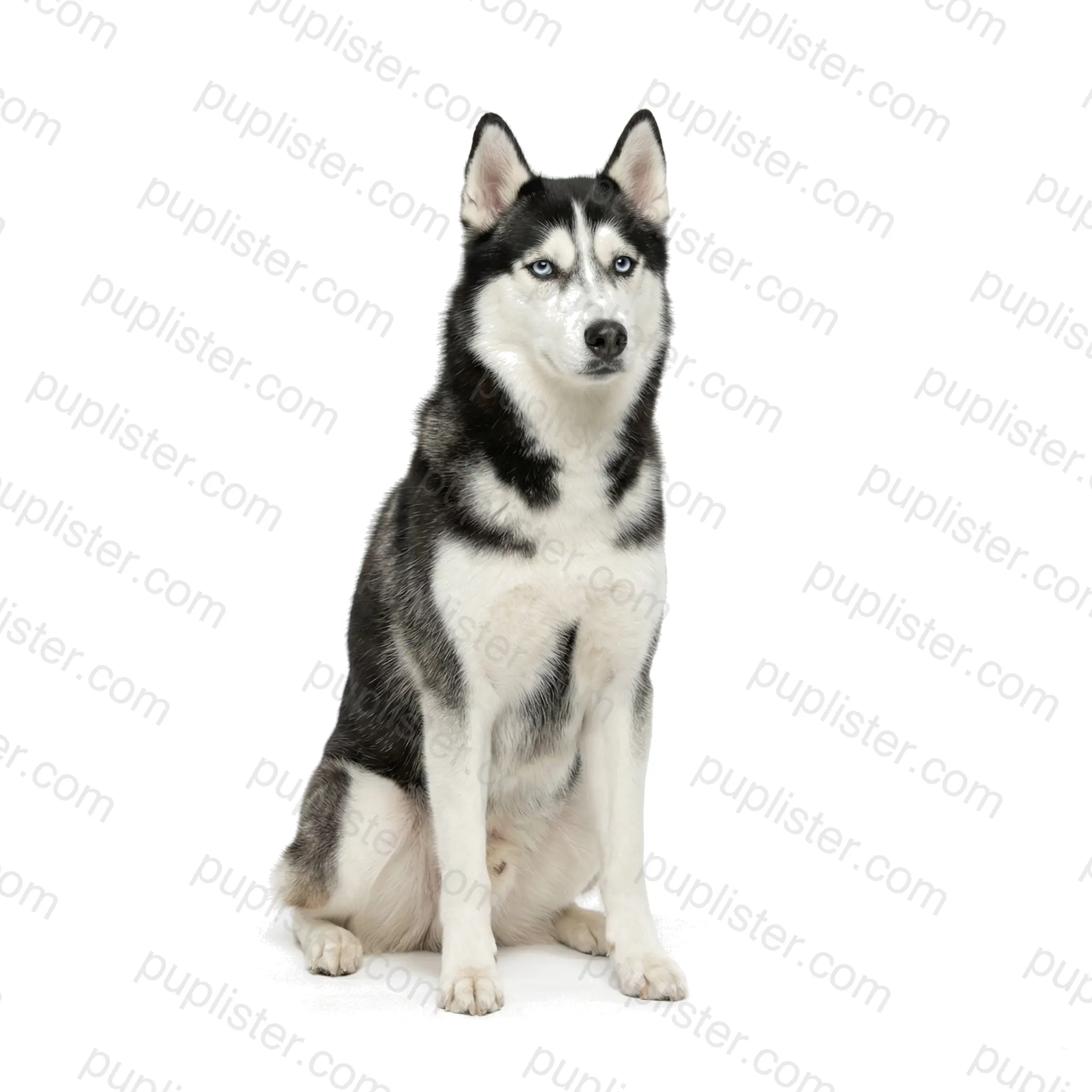
About the Siberian Husky
The Siberian Husky was developed over thousands of years by the Chukchi people of northeastern Siberia as an endurance sled dog capable of pulling light loads over vast frozen distances in extreme cold. These athletic, medium-sized dogs stand 20 to 23.5 inches tall and weigh 35 to 60 pounds, with a graceful, effortless gait that reflects their incredible stamina. Their thick double coat comes in virtually every color from pure white to black, often with striking facial markings, and their eyes can be brown, blue, or even one of each (heterochromia).
Temperament & Personality
Siberian Huskies are friendly, outgoing, and mischievous — pack-oriented dogs that love people and make terrible guard dogs because they greet everyone like a long-lost friend. They are playful and gentle with children and generally good with other dogs, though their high prey drive makes them a risk around cats and small animals. Huskies are intelligent but famously independent, preferring to make their own decisions rather than follow commands — a trait that requires patience and humor from their owners.
Pros
- Friendly, social, and gentle with children and strangers alike
- Naturally clean with little doggy odor — self-grooming like a cat
- Outstanding endurance athlete for running, hiking, and winter sports
- Healthy breed with a lifespan of 12 to 14 years
Cons
- Extreme shedding — blows the entire undercoat twice yearly in massive quantities
- Legendary escape artists — can jump fences, dig under them, and open latches
- Strong prey drive makes them dangerous around cats, rabbits, and small animals
- Not suited for hot climates and requires air conditioning in warm regions
The Siberian Husky's adventurous spirit and stunning beauty are irresistible — find Huskies seeking forever homes on Puplister.