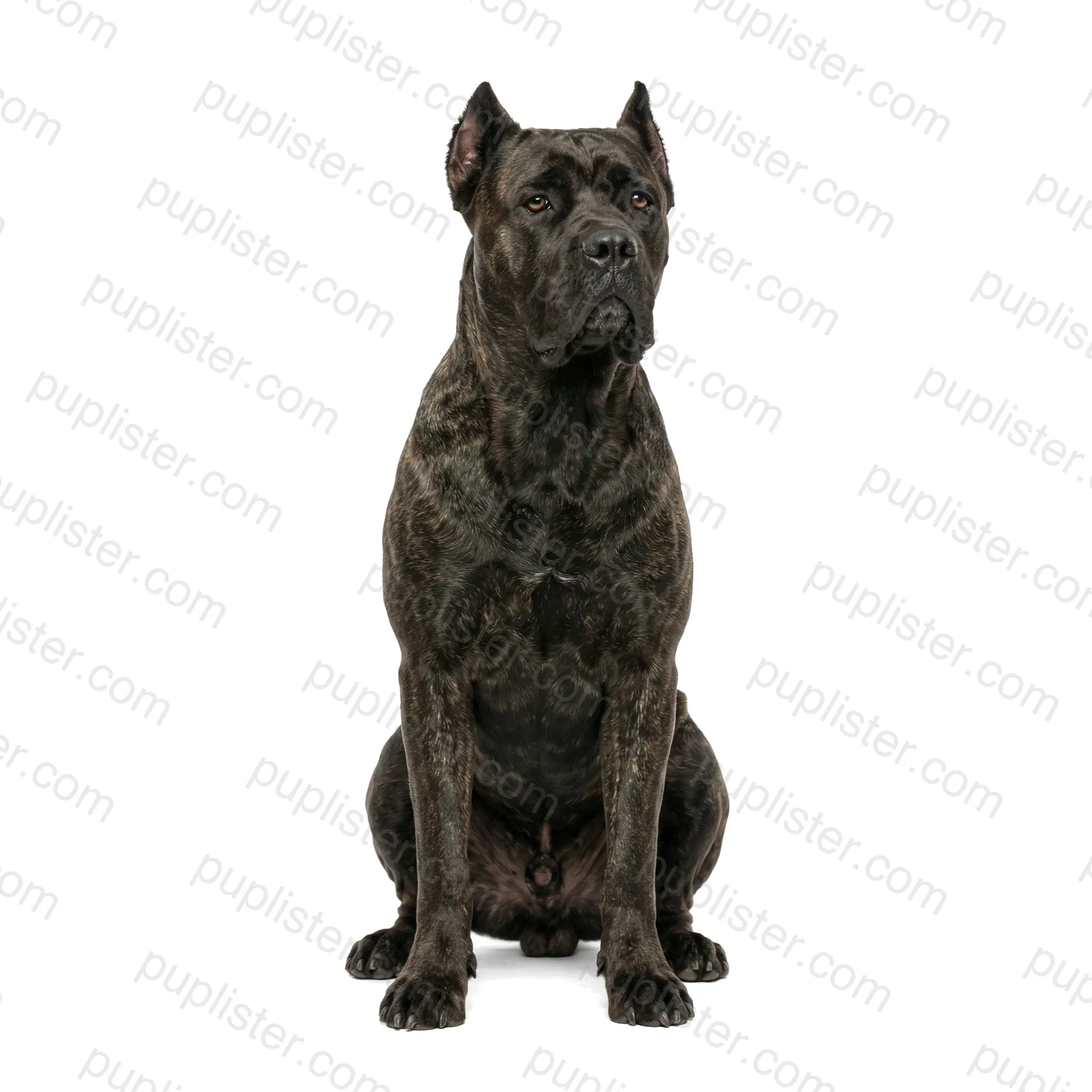
About the Cane Corso
The Cane Corso is an ancient Italian mastiff breed whose lineage traces directly to the Roman canis pugnaces — war dogs that accompanied legions into battle. Standing 23.5–27.5 inches tall and weighing 90–120 pounds, the Cane Corso is a large, athletic, and muscular dog that is notably more agile and less bulky than other mastiff breeds. Their short, stiff, double-layered coat comes in black, gray, fawn, red, and brindle — often with a black or gray mask — and requires minimal grooming.
Temperament & Personality
Cane Corsos are intelligent, loyal, and intensely protective — they are working dogs at heart, bred to guard property, livestock, and families with quiet confidence and unwavering vigilance. They bond deeply with their owners and are affectionate and gentle within the family circle, but they are naturally suspicious of strangers and can be assertive with other dogs. This is emphatically not a breed for inexperienced owners — they require firm, consistent leadership and extensive socialization from puppyhood.
Pros
- Exceptional guardian — their protective instincts are reliable and deeply ingrained
- More athletic and agile than other mastiff breeds, capable of true working performance
- Loyal and affectionate with family — surprisingly gentle with children they've been raised with
- Low-maintenance coat with minimal grooming needs
Cons
- Requires an experienced, confident owner who can establish and maintain leadership
- Can be dog-aggressive and territorial without thorough socialization
- Prone to hip dysplasia, bloat, cherry eye, and idiopathic epilepsy
- Their size and strength can make them dangerous if improperly trained or handled
For the right owner, a Cane Corso is an unparalleled companion and protector — find adoptable Cane Corsos on Puplister.