About the Poodle
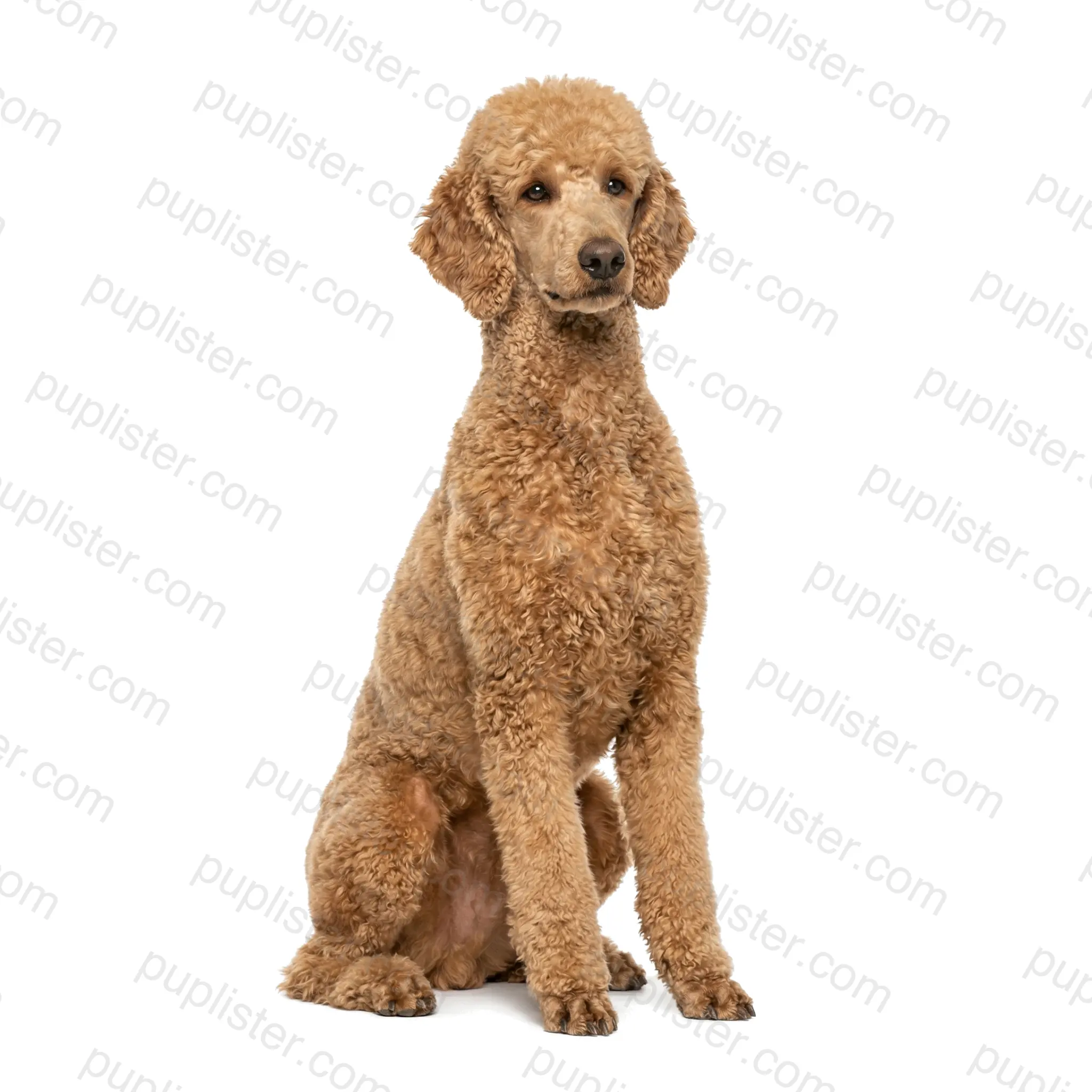
The Poodle — despite its association with France — likely originated in Germany as a water retriever, with the name derived from the German "pudeln" meaning "to splash." The breed comes in three AKC-recognized sizes: Standard (over 15 inches, 40 to 70 pounds), Miniature (10 to 15 inches, 10 to 15 pounds), and Toy (under 10 inches, 4 to 6 pounds). Their dense, curly, single-layer coat is virtually non-shedding and comes in a wide array of solid colors including white, black, apricot, silver, blue, and café au lait.
Temperament & Personality
Poodles are among the most intelligent dog breeds in the world — ranked second only to the Border Collie — with an exceptional ability to learn commands and solve problems. All three sizes are active, proud, and eager to please, forming strong bonds with their families and excelling in virtually every canine sport and discipline. They are generally good with children and other pets, with Standards being the most laid-back and Toys tending to be the most sensitive.
Pros
- Non-shedding coat produces less dander — widely recommended for allergy sufferers
- Exceptionally intelligent and versatile — excels in obedience, agility, and therapy work
- Three size varieties allow matching to nearly any living situation
- Athletic and energetic with excellent longevity across all sizes
Cons
- Coat requires professional grooming every 4 to 6 weeks without exception
- Prone to hip dysplasia (Standards), epilepsy, and Addison's disease
- Can develop separation anxiety and neurotic behaviors without mental stimulation
- Sensitive temperament requires gentle, consistent training methods
Whether you prefer Standard, Miniature, or Toy — your perfect Poodle match could be on Puplister right now.