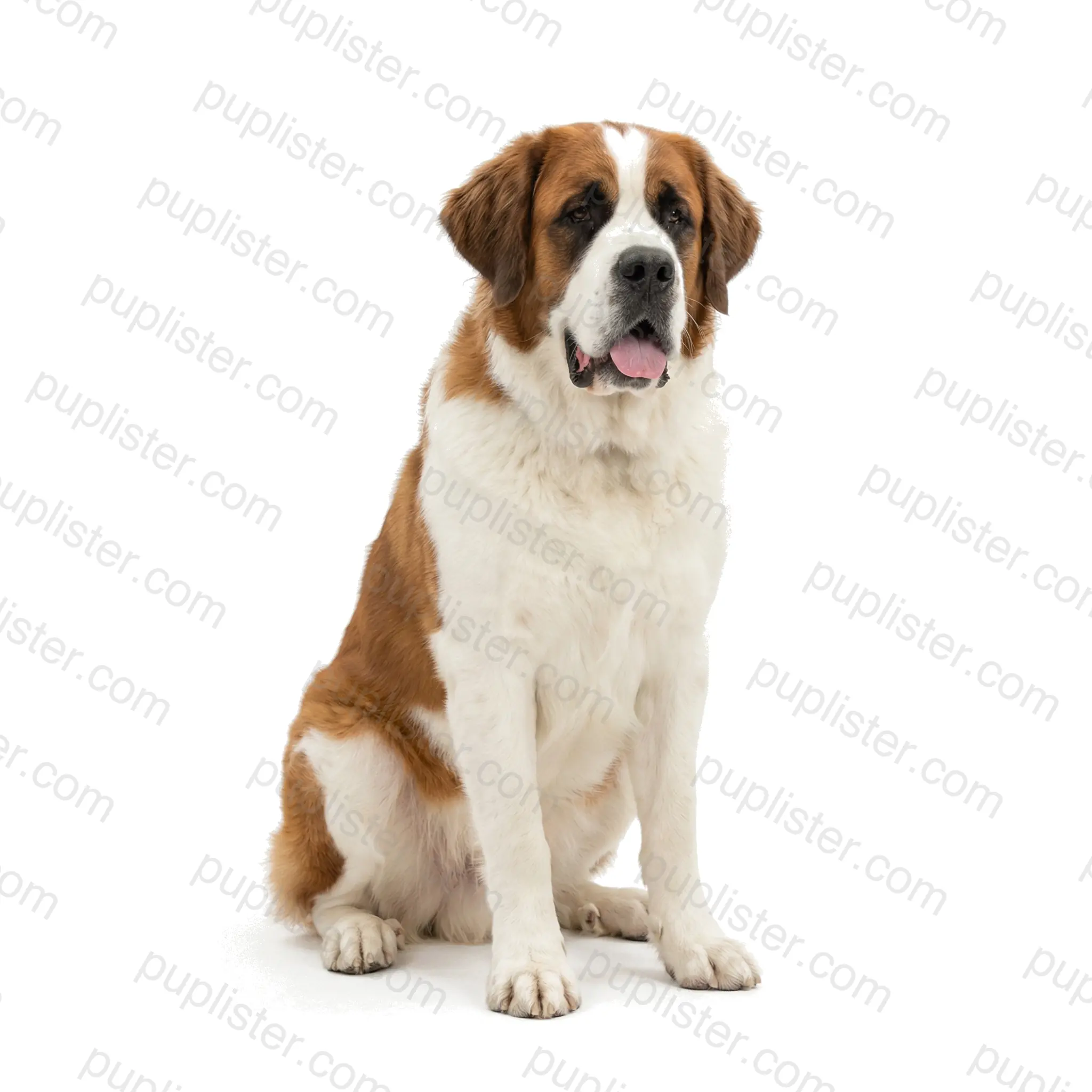
About the Saint Bernard
The Saint Bernard originated in the Swiss Alps at the Great St. Bernard Hospice, where monks bred these massive dogs for over 1,000 years to locate and rescue travelers lost in snowstorms along the treacherous mountain pass. Males typically stand 28 to 30 inches tall and weigh 140 to 180 pounds, though individuals exceeding 200 pounds are not uncommon. Their coat comes in two varieties — short-haired (smooth) and long-haired (rough) — both in white with red, mahogany, brindle, or brown markings.
Temperament & Personality
Saint Bernards are gentle, patient, and extraordinarily tolerant — their legendary devotion to humans extends to being remarkably careful and nurturing around children despite their massive size. They are friendly with strangers, other dogs, and household pets, possessing a calm, unflappable demeanor that makes them wonderful therapy dogs. While not aggressive, their sheer size and deep bark are often enough to deter unwanted visitors.
Pros
- Exceptionally gentle and patient — one of the best giant breeds for families with children
- Calm, low-energy indoor demeanor despite enormous size
- Friendly and non-aggressive toward people and other animals
- Imposing presence provides natural deterrent without guard training
Cons
- Legendary drooling — especially the loose-lipped, heavy-jowled individuals
- Short lifespan of 8 to 10 years, with some living even less
- Prone to hip and elbow dysplasia, bloat, osteosarcoma, and dilated cardiomyopathy
- Enormous food costs and substantial space requirements for comfortable living
Few breeds embody devotion quite like the Saint Bernard — find one in need of a loving home on Puplister.