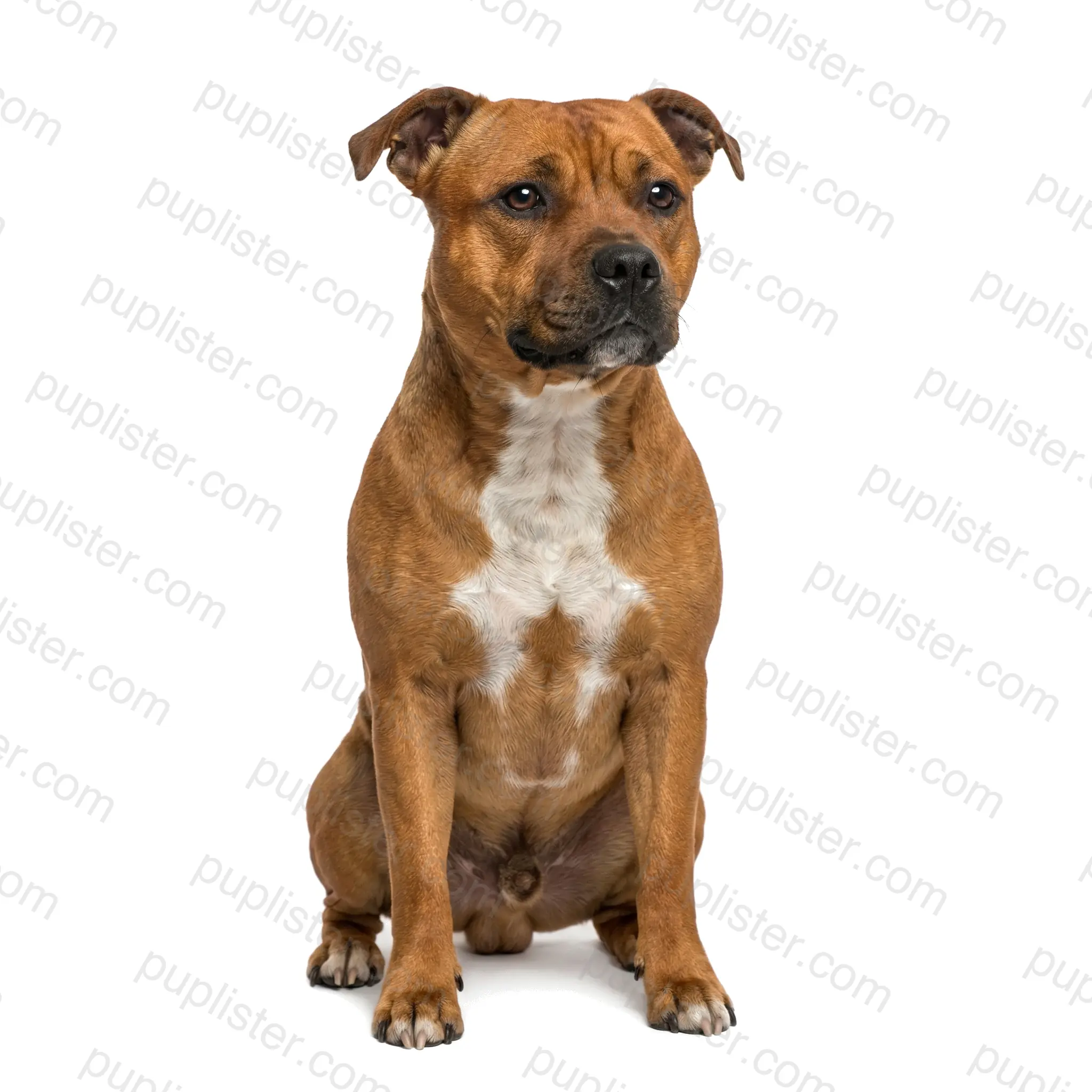
About the Staffordshire Bull Terrier
The Staffordshire Bull Terrier was developed in 19th-century England's Staffordshire region from crosses between Bulldogs and various terriers, originally bred for bull-baiting and later as a compact, agile fighting dog — a history that belies its true nature as a devoted family companion. These muscular, athletic dogs stand 14 to 16 inches tall and weigh 24 to 38 pounds, packed with surprising strength and agility in a compact frame. Their smooth, short coat comes in red, fawn, white, black, blue, or brindle — with or without white markings.
Temperament & Personality
Staffordshire Bull Terriers are affectionate, courageous, and remarkably gentle with people — earning the nickname "nanny dog" in England for their extraordinary patience and devotion to children. They adore human companionship, are playful well into adulthood, and form intensely loyal bonds with their families. While they can be assertive with other dogs, proper socialization from puppyhood typically produces a confident, well-adjusted adult that gets along with everyone.
Pros
- Exceptionally affectionate and gentle with children and family members
- Compact, muscular build well-suited for smaller homes and apartments
- Low-maintenance coat requiring only occasional brushing
- Brave and loyal — a devoted companion that thrives on human interaction
Cons
- Can be dog-aggressive without careful socialization and management
- Breed-specific legislation and housing restrictions in many jurisdictions
- Prone to hip and elbow dysplasia, L-2 hydroxyglutaric aciduria, and cataracts
- Strong and powerful — requires owners who can provide firm, consistent leadership
Staffies are among the most devoted family dogs in existence — find a Staffordshire Bull Terrier on Puplister and see for yourself.