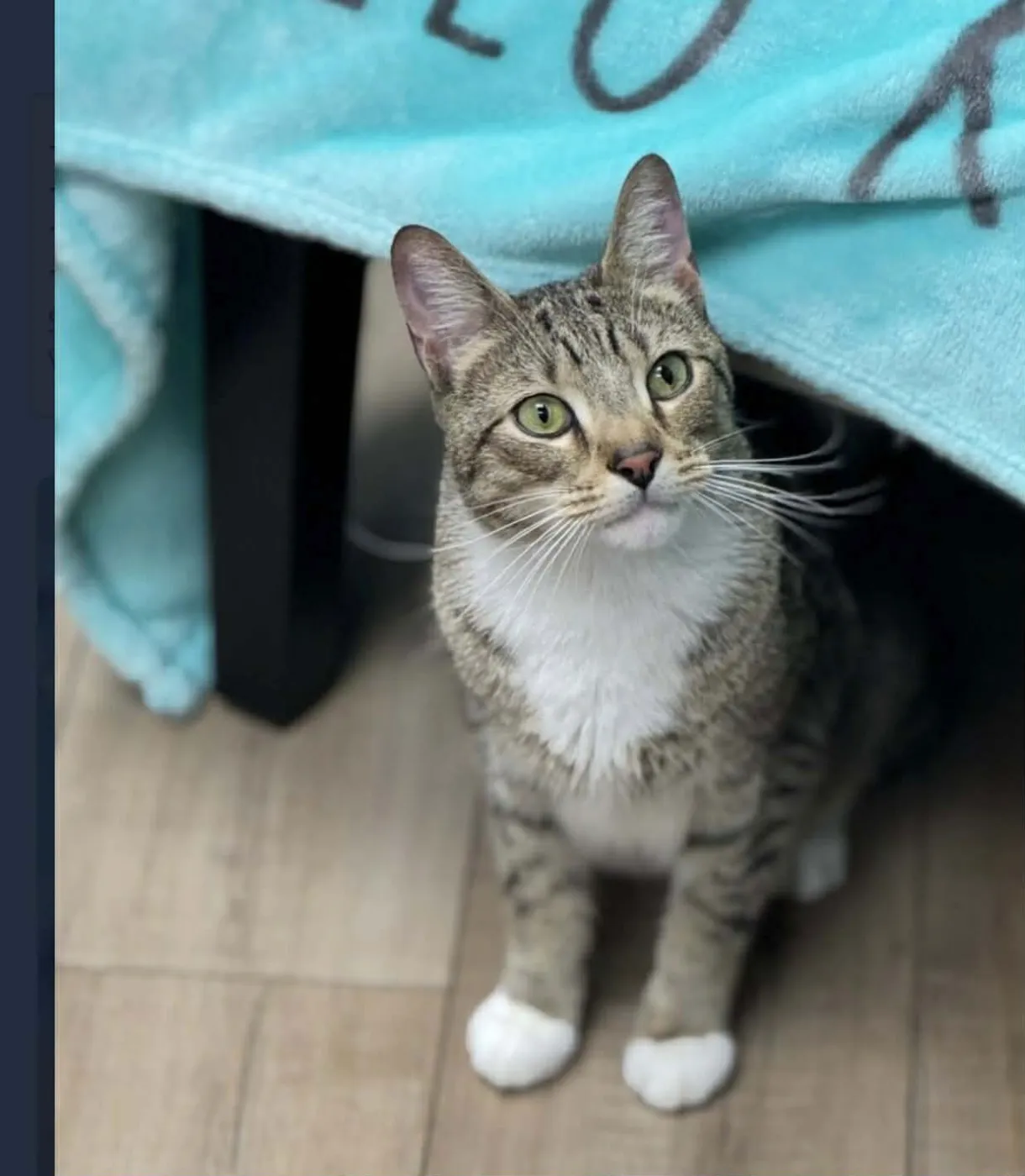
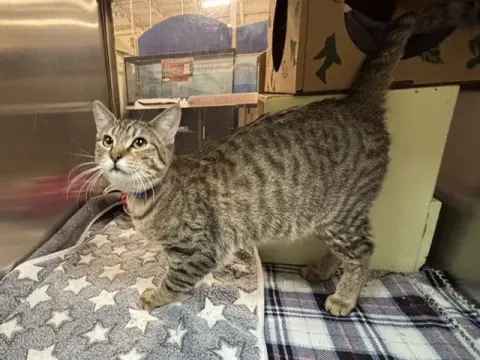
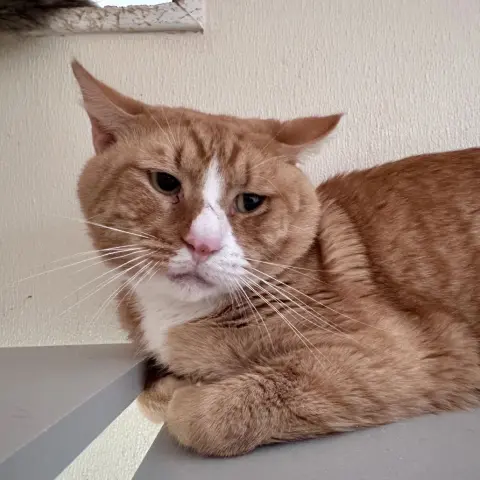
Major is a charming young tabby with a playful spirit and a heart full of curiosity. He loves to explore his surroundings, chase after toys, and engage in interactive play sessions. Despite his energetic side, Major also enjoys quiet moments for cuddles and purrs, making him a delightful companion for those seeking both fun and affection.
As a Domestic Shorthair, Major embodies the adaptable and generally robust nature of his mixed breed heritage. He is likely to be intelligent, social, and eager to bond with his human family. His short coat is easy to maintain, requiring minimal grooming, and he typically has moderate shedding. Major's moderate energy level means he'll thrive with regular playtime and mental stimulation to keep him happy and healthy.
Major is looking for a loving home where he can be an integral part of the family. He would do well with individuals or families who can provide him with engaging toys, consistent attention, and a safe indoor environment. While he's adaptable, a home that appreciates his balance of playfulness and affection would be ideal for this wonderful boy.