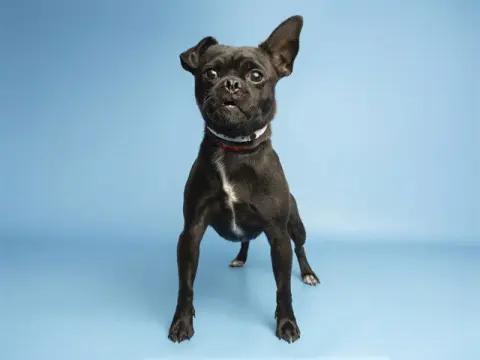
Archie is a charming 3.5-year-old fawn Pug with a heart full of snuggles! He's a friendly boy who gets along wonderfully with other dogs and is also good with older children. Archie is crate trained and enjoys the comfort of his human's company, especially when it's time to go outside. He's looking for a home where he can continue to thrive with regular attention and affection.
As a Pug, Archie embodies the breed's characteristic playful yet relaxed nature. Pugs are known for being affectionate companion dogs, and Archie is no exception, loving to snuggle up with his people. While generally low-maintenance in terms of grooming, Pugs do shed moderately and enjoy daily walks to keep them happy and healthy. His moderate energy level means he's up for adventures but equally content to relax by your side.
Archie's ideal home would include another dog friend to buddy with, as he truly thrives with canine companionship. He is potty trained and does well on a regular schedule, though he appreciates his human joining him for outdoor excursions. A family that can provide consistent attention, a structured routine, and plenty of cuddles would be perfect for this sweet boy. All Pugs must be indoor dogs and kept current on heartworm prevention.