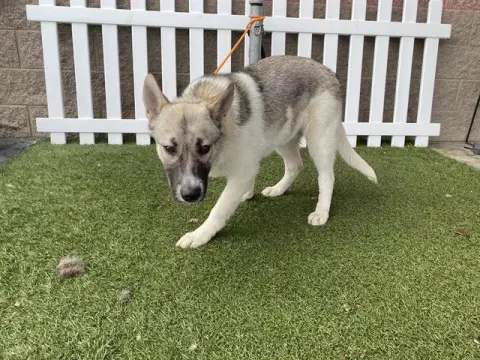
Daisy is an adorable little German Shepherd puppy, full of the boundless curiosity and playful spirit characteristic of her young age. While we don't know much about her past, she's ready to soak up all the love and training a new family can offer. She's a blank slate, eager to learn and grow into a wonderful companion.
German Shepherds are renowned for their intelligence, loyalty, and protective instincts. As Daisy matures, she will likely display these traits, making her a devoted family member. They are a high-energy breed that thrives on mental stimulation and physical activity. Early socialization and consistent training will be crucial to help her develop into a well-adjusted adult dog.
Daisy is looking for an active home committed to her development. She will need a family prepared for her significant exercise requirements, including daily walks, playtime, and opportunities for mental engagement. A secure yard would be a bonus for her to explore safely. Patience and positive reinforcement training will help her blossom into the incredible dog she's destined to be.