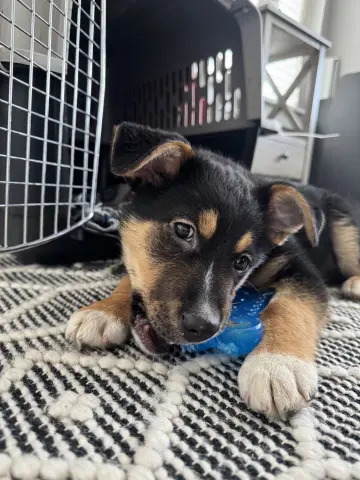
This adorable German Shepherd puppy, Puppy, is a bundle of joy and curiosity, ready to explore the world with boundless enthusiasm. Like most puppies, he is playful, eager to learn, and thrives on positive interaction. He will benefit greatly from early socialization and consistent training to help him grow into a well-adjusted and confident companion.
German Shepherds are renowned for their intelligence, loyalty, and protective instincts. As he matures, Puppy will likely display these characteristic traits, making him a devoted family member. This breed is highly trainable and excels in various dog sports and activities. They are generally good with children and other pets when properly socialized from a young age, forming strong bonds with their human pack.
Puppy is looking for an active home that understands the commitment required for a German Shepherd. He will need plenty of mental stimulation and physical exercise daily to prevent boredom and ensure he develops into a happy, healthy adult. A family dedicated to ongoing training, socialization, and providing a loving, structured environment will be the perfect match for this bright young pup.