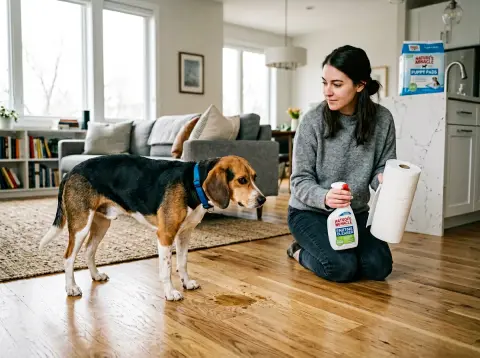
Rescue Dog Peeing in the House: Causes and Fixes
Is your rescue dog peeing in the house? Learn common causes, a 30-day potty training plan, and expert fixes for house-soiling issues.
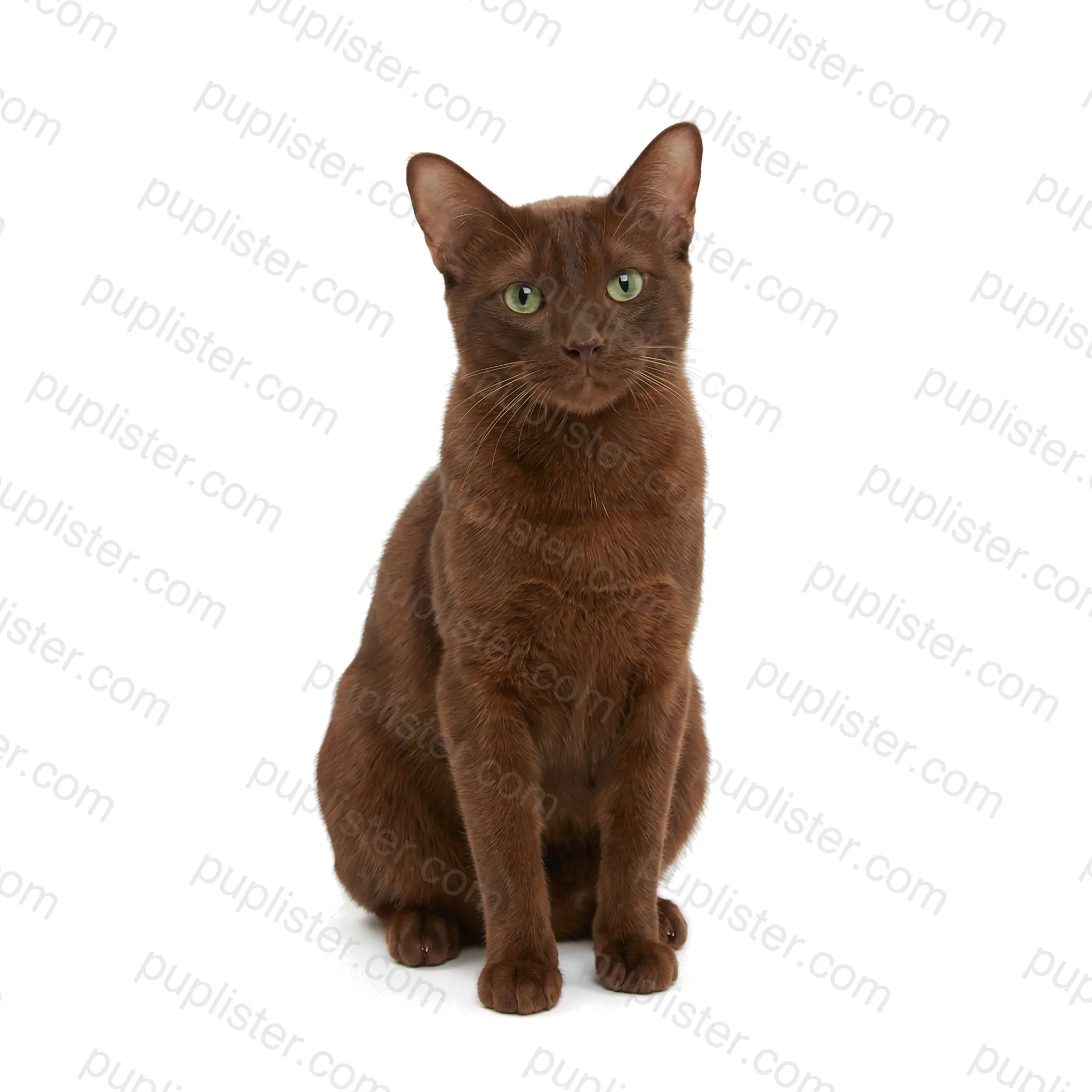
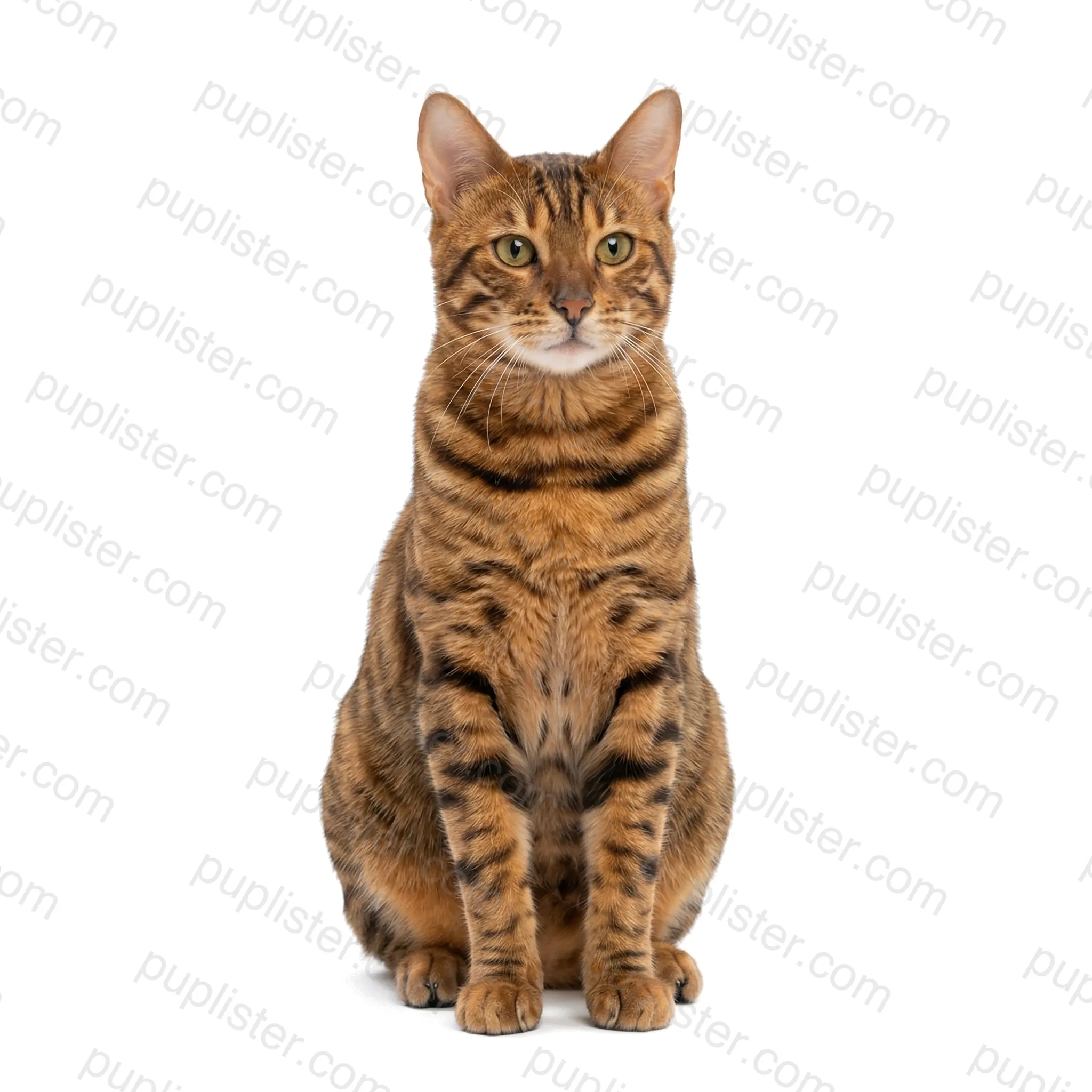
The Havana Brown was developed in 1950s England by crossing chocolate-point Siamese with black domestic cats, creating a breed distinguished by its rich, warm mahogany-brown coat. This medium-sized breed weighs 6–10 pounds and has a distinctive muzzle that is noticeably wider than it is long — giving the head a unique "corn cob" shape when viewed from above. Their glossy, short coat is uniformly chocolate brown, complemented by vivid green eyes, brown whiskers, and rosy-brown nose leather and paw pads.
Havana Browns are charming, people-oriented cats that use their paws to investigate and reach out to touch their owners — a behavior unique to this breed. They are moderately active, enjoy interactive play, and are gentle enough for families with children. They tend to bond closely with one particular person while remaining friendly with the rest of the household.
The rare and captivating Havana Brown is a true treasure — search for adoptable cats on Puplister.
Answer 5 quick questions to see how well this breed matches your lifestyle.
1 pet available
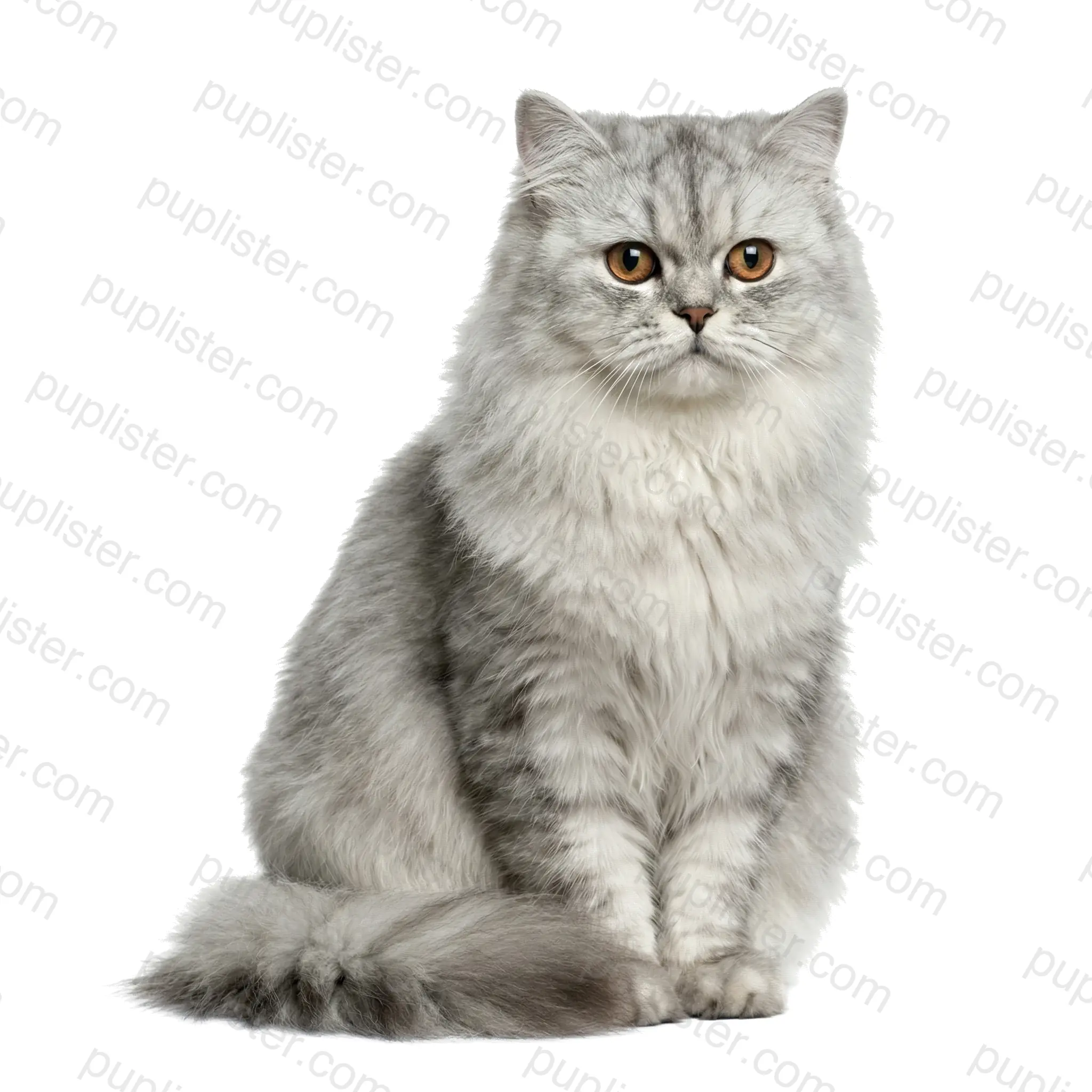
5About the Scottish Straight The Scottish Straight is the straight-eared sibling of the Scottish Fold, born in the same litters but without the ear-fold mutation. This medium-sized cat weighs 6–13 pounds and shares the Fold's round face, big eyes, and compact build — the only visible difference is the upright, normally shaped ears. They appear in all the same coat types, colors, and patterns as the Fold, from short dense coats to flowing longhair in tabby, solid, bicolor, and more.Temperament & PersonalityScottish Straights have the same sweet, mellow temperament as their folded-eared relatives — playful without being hyperactive, affectionate without being clingy. They enjoy interactive play and are known for their soft, chirpy voices. Friendly and adaptable, they do well with children, other cats, and cat-friendly dogs.ProsSame charming Scottish personality without the ear-fold cartilage concernsSignificantly lower risk of osteochondrodysplasia compared to Fold siblingsAdaptable and easygoing in most household environmentsModerate grooming needs — even the longhair variety is manageableConsCan still carry the fold gene and may pass cartilage issues to offspring if bred with a FoldLess distinctive in appearance compared to the Fold — sometimes overlooked by adoptersMay still inherit some predisposition to joint issues from the breed lineProne to weight gain without proper diet management and exerciseWant the beloved Scottish personality with healthier ears? Search for Scottish Straight cats on Puplister and give one a loving home.
1 pet available
3About the Siberian The Siberian — Russia's national cat — is a natural breed that has existed in the forests of Siberia for at least 1,000 years, first appearing in Russian fairy tales and eventually standardized as a breed in the 1980s. This large, powerful cat weighs 10–20 pounds and features a triple-layered, waterproof coat that protected it through harsh Russian winters — a dense undercoat, longer middle layer, and coarse guard hairs. They come in all colors and patterns, including the stunning pointed "Neva Masquerade" variety.Temperament & PersonalitySiberians are affectionate, adventurous cats with a playful, kitten-like spirit that lasts well into their senior years. They love water — don't be surprised to find one splashing in the sink or drinking from the faucet. Gentle and patient, they are excellent with children and other pets, and they possess a calm confidence that makes them unfazed by the chaos of a busy household.ProsProduces significantly lower levels of Fel d 1 allergen — often tolerated by cat-allergy sufferersHardy, naturally evolved breed with excellent overall health and longevityAffectionate and playful — retains kitten-like energy into adulthoodGentle and patient — superb family cat for homes with children and other petsConsTriple coat requires regular brushing, especially during heavy seasonal sheddingLarge size means higher food costs and the need for sturdy cat furnitureSlow to mature — may not reach full size and coat until age fiveCan be prone to hypertrophic cardiomyopathy, though less common than in some breedsDreaming of a hypoallergenic gentle giant from the Russian forests? Search for Siberian cats on Puplister and find your perfect fluffy companion.
26 pets available
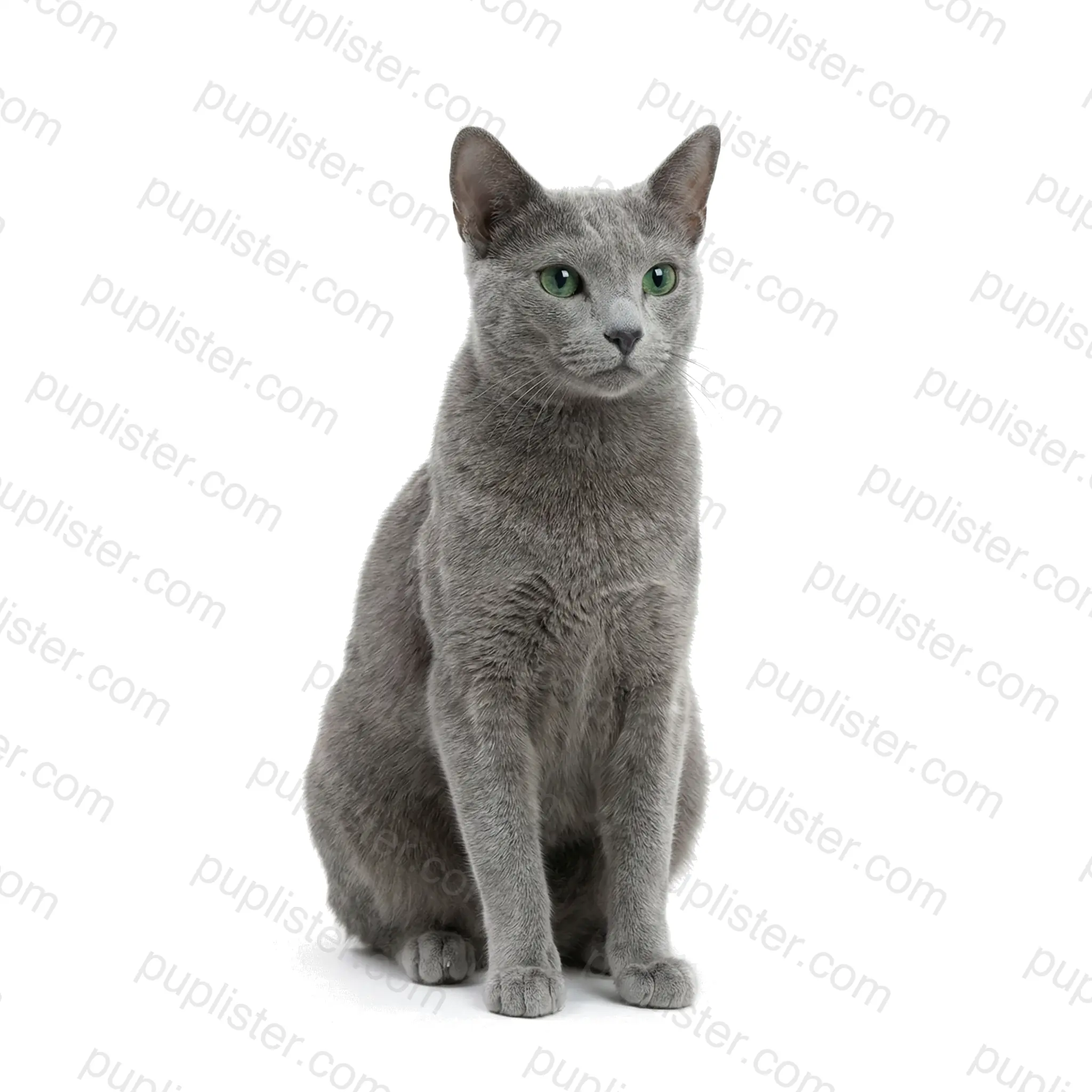
13About the Russian Blue The Russian Blue is a naturally occurring breed believed to have originated in the port city of Arkhangelsk (Archangel) in northern Russia, arriving in Europe aboard trade ships in the 1860s. This medium-sized cat weighs 7–12 pounds and is renowned for its dense, plush double coat of uniform blue-gray with silver-tipped guard hairs that give it a luminous shimmer. Its vivid emerald-green eyes, wedge-shaped head, and enigmatic "Mona Lisa smile" complete an unmistakably elegant look.Temperament & PersonalityRussian Blues are gentle, reserved cats that are intensely loyal to their families yet cautious around strangers. They are creatures of habit who thrive on routine — eating at the same time, playing in the same spots, and sleeping in their preferred perch. Once bonded, they are affectionate and playful, often fetching toys and entertaining themselves with quiet grace.ProsProduces lower levels of the Fel d 1 allergen — better tolerated by some allergy sufferersDense double coat is low-shedding and virtually maintenance-freeQuiet and well-mannered — rarely destructive or excessively vocalLong-lived breed with few genetic health issues — many reach 15–20 yearsConsShy and reserved with strangers — may hide during gatherings or partiesSensitive to change — can become stressed by moves, new pets, or schedule disruptionsProne to overeating and weight gain if food is left out freelyCan be slow to warm up to new family members or housematesCharmed by those emerald eyes and silver-tipped fur? Find Russian Blue cats ready for their forever homes on Puplister.
1 pet available
3About the Tonkinese The Tonkinese is a deliberate cross between the Siamese and the Burmese, first developed in the 1960s to blend the best of both breeds into one medium-sized, beautifully balanced cat. Weighing 6–12 pounds, the Tonkinese has a muscular, surprisingly heavy body for its size, a gently rounded wedge head, and stunning aqua-colored eyes — a hallmark of the breed's "mink" coat pattern. They also come in pointed (Siamese-style) and solid/sepia (Burmese-style) patterns in natural, champagne, blue, and platinum.Temperament & PersonalityTonkinese cats are the social butterflies of the cat world — outgoing, playful, and utterly devoted to their humans. They are less vocal than the Siamese but more active than the Burmese, striking a perfect balance. Known for their clown-like antics and love of games, they thrive in busy households with children, dogs, and other cats.ProsUnique aqua eyes in the mink pattern — unlike any other breedPerfect temperament balance — social and playful without being overly demandingGets along brilliantly with children, dogs, and other catsShort, silky coat needs virtually no groomingConsHates being alone — strongly recommended to have a companion petProne to inflammatory bowel disease and some dental issuesExtremely trusting — has zero survival instincts outdoorsHigh energy means they need daily interactive play to prevent boredomLooking for the perfect blend of Siamese and Burmese charm? Find Tonkinese cats available for adoption on Puplister and meet your aqua-eyed soulmate.
Is your rescue dog peeing in the house? Learn common causes, a 30-day potty training plan, and expert fixes for house-soiling issues.
Looking for the best GPS tracker for your dog? We reviewed the top 4 models for every budget — from $28 to $105. Find your perfect tracker in 2026.
Dog reverse sneezing can be scary, but it's usually a harmless reflex. Learn what causes it, how to help your dog, and when to seek vet care.
Adopting a cat doesn't have to be expensive. With smart budgeting and the right resources, even those on a tight income can provide a loving, healthy home for a feline companion.