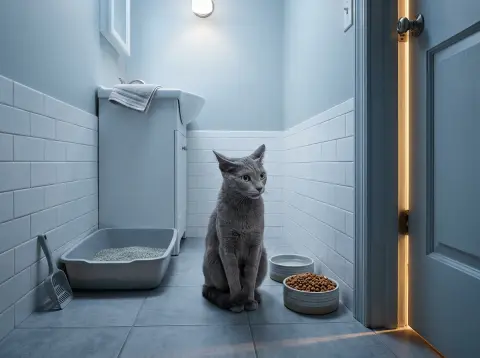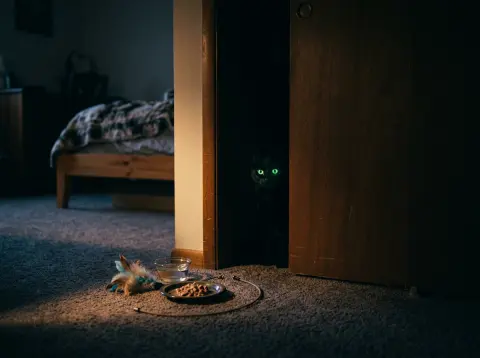








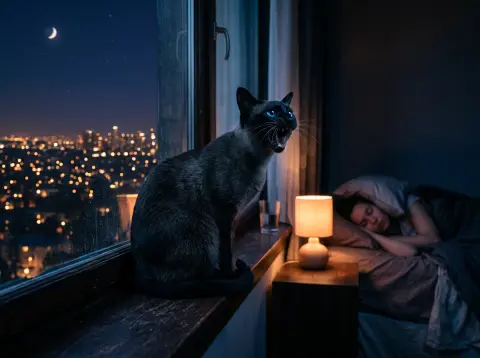
Adopted Cat Meowing All Night: How to Stop It
Adopted cat meowing all night? Discover why it happens, how to create a calm environment, and a realistic timeline to quiet nighttime meows.
The American Cocker Spaniel — the smallest of the sporting breeds — descended from English Cocker Spaniels brought to North America in the late 1800s and was developed as both a skilled bird flusher and an adoring family companion. Standing 13.5–15.5 inches tall and weighing 20–30 pounds, the Cocker Spaniel is known for its luxurious, silky coat that comes in black, ASCOB (any solid color other than black), and parti-color varieties. Their large, soulful dark eyes and perpetually wagging tail have made them one of America's most beloved breeds for decades.
Cocker Spaniels are the quintessential happy dog — eager to please, gentle, and brimming with affection for everyone they meet. They thrive on human companionship and are wonderful with children, other dogs, and even cats when properly introduced. Their sensitive nature means they respond best to positive reinforcement and can become anxious or submissive if treated harshly.
Ready to welcome a joyful, tail-wagging Cocker Spaniel into your life? Find your perfect match on Puplister.
Answer 5 quick questions to see how well this breed matches your lifestyle.
14 pets available
2About the Miniature Pinscher The Miniature Pinscher — affectionately called the "Min Pin" — originated in Germany several centuries ago, likely bred from a combination of Dachshunds and Italian Greyhounds. Standing 10 to 12.5 inches tall and weighing 8 to 12 pounds, these spirited dogs are far older than the Doberman and are not simply a scaled-down version of that breed. Their sleek, smooth coat comes in red, stag red, black and tan, or chocolate and tan with a naturally glossy sheen. Temperament & Personality Miniature Pinschers are bold, energetic, and remarkably self-assured — often described as having a big-dog attitude in a toy-sized body. They are entertaining and devoted to their owners but can be independent and stubborn during training sessions. Min Pins generally do well with older children and can coexist with other dogs, though they may try to assert dominance over much larger breeds. Pros Minimal grooming needed thanks to their short, smooth coatExcellent watchdog with an alert, vocal natureCompact size perfect for apartment and urban livingHighly energetic and entertaining companion for active owners Cons Notorious escape artists — can squeeze through small gaps and jump surprisingly highProne to patellar luxation and Legg-Calvé-Perthes diseaseStubborn streak makes housetraining more challenging than averageHigh prey drive means unreliable off-leash in unfenced areas Think a fearless little companion with endless personality is right for you? Search for Miniature Pinschers available on Puplister.
7 pets available
1About the Pomeranian The Pomeranian descends from large sled-pulling spitz dogs of Iceland and Lapland, selectively bred down to toy size in the Pomerania region of northeastern Europe during the 18th and 19th centuries — Queen Victoria famously popularized the smaller variety. These tiny dogs weigh just 3 to 7 pounds and stand 6 to 7 inches tall, yet carry themselves with unmistakable confidence. Their magnificent double coat — a dense undercoat beneath a profuse, standoff outer coat — comes in nearly every color and pattern imaginable, with orange and red being most popular. Temperament & Personality Pomeranians are vivacious, bold, and surprisingly commanding for their size — they have no concept of how small they are and will happily try to boss around much larger dogs. They are devoted to their owners and can be excellent companions for singles and seniors, though they may be too fragile and snappy for homes with very young children. Poms are intelligent and curious, learning tricks quickly, but they also have a strong independent streak inherited from their spitz ancestry. Pros Tiny size makes them ideal for apartment living and travelAlert and vocal watchdog — always aware of surroundingsIntelligent and responsive to training with positive methodsLong lifespan of 12 to 16 years with proper care Cons Profuse shedding — the fluffy coat requires brushing several times weeklyProne to luxating patella, tracheal collapse, and severe dental diseaseFragile bones easily injured by falls, rough handling, or being stepped onExcessive barking can become a serious behavioral issue without training These tiny furballs pack enormous personality — find Pomeranians seeking loving homes on Puplister.
137 pets available
1About the Chihuahua The Chihuahua is the world's smallest dog breed, originating from the Mexican state of Chihuahua where ancestors of the breed were kept by the ancient Toltec civilization. Standing just 5–8 inches tall and weighing a mere 2–6 pounds, these tiny dogs come in smooth-coat and long-coat varieties with virtually every color and pattern combination imaginable. Despite their diminutive size, Chihuahuas carry themselves with a bold, terrier-like confidence that belies their fragile frame.Temperament & PersonalityChihuahuas are fiercely devoted to one person — often forming an almost obsessive bond with their chosen human. They are alert, spirited, and surprisingly courageous, frequently standing up to dogs many times their size without hesitation. While they can be wonderful companions for older children who handle them gently, their small size and tendency toward snappiness make them a poor match for households with toddlers.ProsPerfect apartment dogs — minimal space and exercise requirementsExceptionally long lifespan of 14–18 years, among the longest of any breedPortable size makes them easy travel companions for on-the-go ownersLow food costs and minimal grooming needs — especially the smooth-coat varietyConsProne to patellar luxation, heart murmurs, hydrocephalus, and dental overcrowdingFragile bones — easily injured by falls, rough play, or being stepped onNotoriously difficult to housebreak due to tiny bladders and stubborn temperamentTendency toward excessive barking and aggression toward strangers if not properly socializedDiscover your perfect pint-sized companion — explore Chihuahuas looking for forever homes right here on Puplister.
2 pets available
About the Flat-Coated Retriever The Flat-Coated Retriever — often called the "Peter Pan of the dog world" — was developed in 19th-century England as a dual-purpose retriever for both land and water work. Standing 22–24.5 inches tall and weighing 60–70 pounds, this elegant sporting dog wears a lustrous, flat-lying coat of solid black or liver that gives the breed its name. Once the most popular retriever in Britain before being eclipsed by Labradors and Goldens, the Flat-Coat remains a hidden gem among sporting breeds.Temperament & PersonalityFlat-Coated Retrievers are famously exuberant and retain their puppy-like enthusiasm well into old age — a trait that delights their owners but demands patience. They are outgoing, optimistic dogs that greet virtually everyone — family, friends, and strangers alike — with unbridled joy and a wagging tail. Their gentle, playful nature makes them excellent family dogs, though their boisterous energy may overwhelm very young children.ProsPerpetually cheerful and optimistic temperament — a natural mood booster for the householdExcellent with children and other dogs — rarely shows aggressionVersatile sporting dog — excels in field trials, agility, obedience, and therapy workBeautiful, easy-care coat that requires only moderate groomingConsTragically high cancer rates — histiocytic sarcoma and other cancers claim many before age 8Average lifespan of just 8–10 years — significantly shorter than similar-sized breedsSlow to mature mentally and physically — can be challenging during the extended adolescent phasePoor watchdog — greets intruders with the same enthusiasm as family membersGive a joyful Flat-Coated Retriever the loving home they deserve — check available dogs on Puplister today.
Adopted cat meowing all night? Discover why it happens, how to create a calm environment, and a realistic timeline to quiet nighttime meows.
Is your adopted cat not eating? Learn the causes, from stress to past trauma, and discover practical solutions to get your new feline friend eating again.
Is your new cat hiding and won't come out? It's normal, but proactive steps can help. Learn how to build trust with your shy adopted cat.
Discover how long it takes for a rescue cat to feel at home with our experienced guide, covering the 3-3-3 rule and actionable tips.