Snowshoe Snowshoe

Snowshoe

Social Affectionate Vocal Intelligent

About the Snowshoe

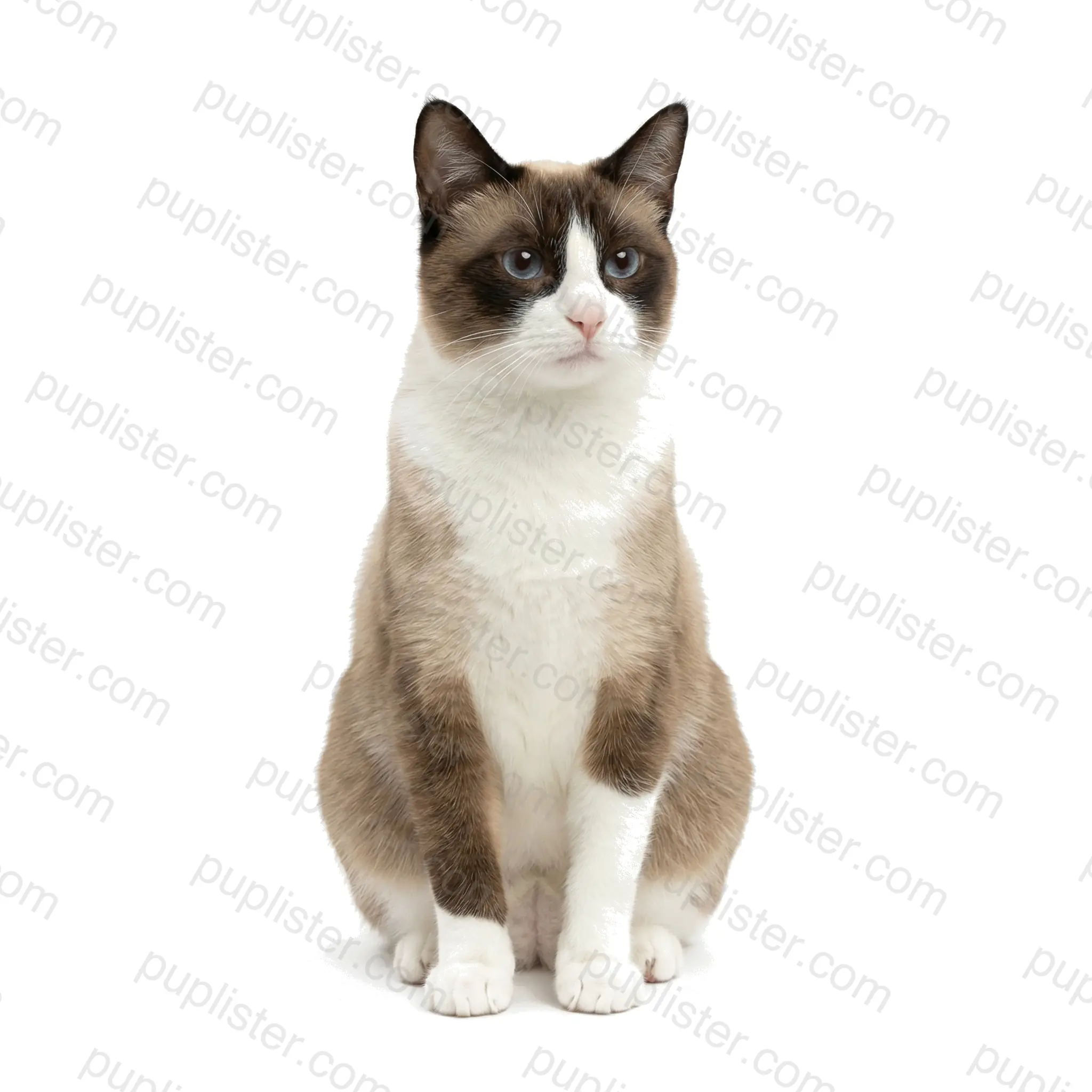
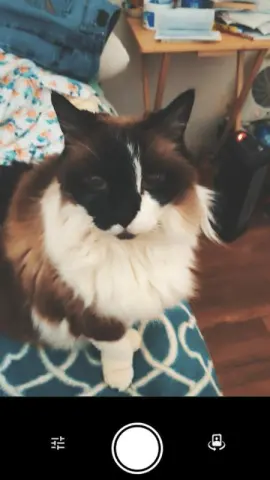
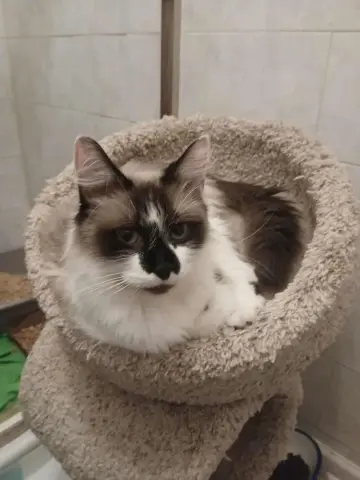
The Snowshoe was developed in the 1960s in Philadelphia by crossing Siamese cats with American Shorthairs, creating a pointed cat with distinctive white "boots" on all four paws. This medium-sized breed weighs 7–12 pounds and combines the Siamese's colorpoint pattern with a more robust, moderately stocky build. Their short, smooth coat comes in seal point and blue point, always featuring white paws, an inverted white "V" on the face, and striking blue eyes.

Temperament & Personality

Snowshoes are vocal, social cats that inherit the Siamese's love of conversation but with a softer, more melodic voice. They are playful and intelligent, often learning to open doors and turn on faucets — many Snowshoes are fascinated by running water. They bond closely with their families and can become distressed if left alone for long periods.

Pros

  • Striking, unique appearance — the white boots and facial markings are hard to resist
  • Vocal but softer-voiced than the Siamese — communicative without being overwhelming
  • Intelligent and playful — enjoys puzzle toys, fetch, and learning tricks
  • Affectionate and loyal — bonds deeply with family members

Cons

  • Prone to separation anxiety — needs companionship throughout the day
  • Markings are unpredictable — "show-quality" pattern is notoriously difficult to breed consistently
  • Can be sensitive and moody — may sulk if they feel ignored
  • Inherited health concerns from Siamese lines, including dental and heart issues

Love the Siamese look with a twist? Browse Snowshoe cats seeking their perfect families on Puplister today.

Snowshoe Quick Facts

Size
7–12 lbs
Lifespan
14–20 years
Exercise
Moderate
Grooming
Low
Good with Kids
Yes
Good with Pets
Yes

Is the Snowshoe right for you?

Answer 5 quick questions to see how well this breed matches your lifestyle.

Take the Quiz

Available Snowshoes

Jasmine
Senior

Snowshoe

Peninsula CatWorks · Sunnyvale, CA
Aimee
Young
Aimee
S

Snowshoe / Mixed

Forever Fortunate Felines · Palatine, IL

Related Breeds

Russian Blue

9 pets available

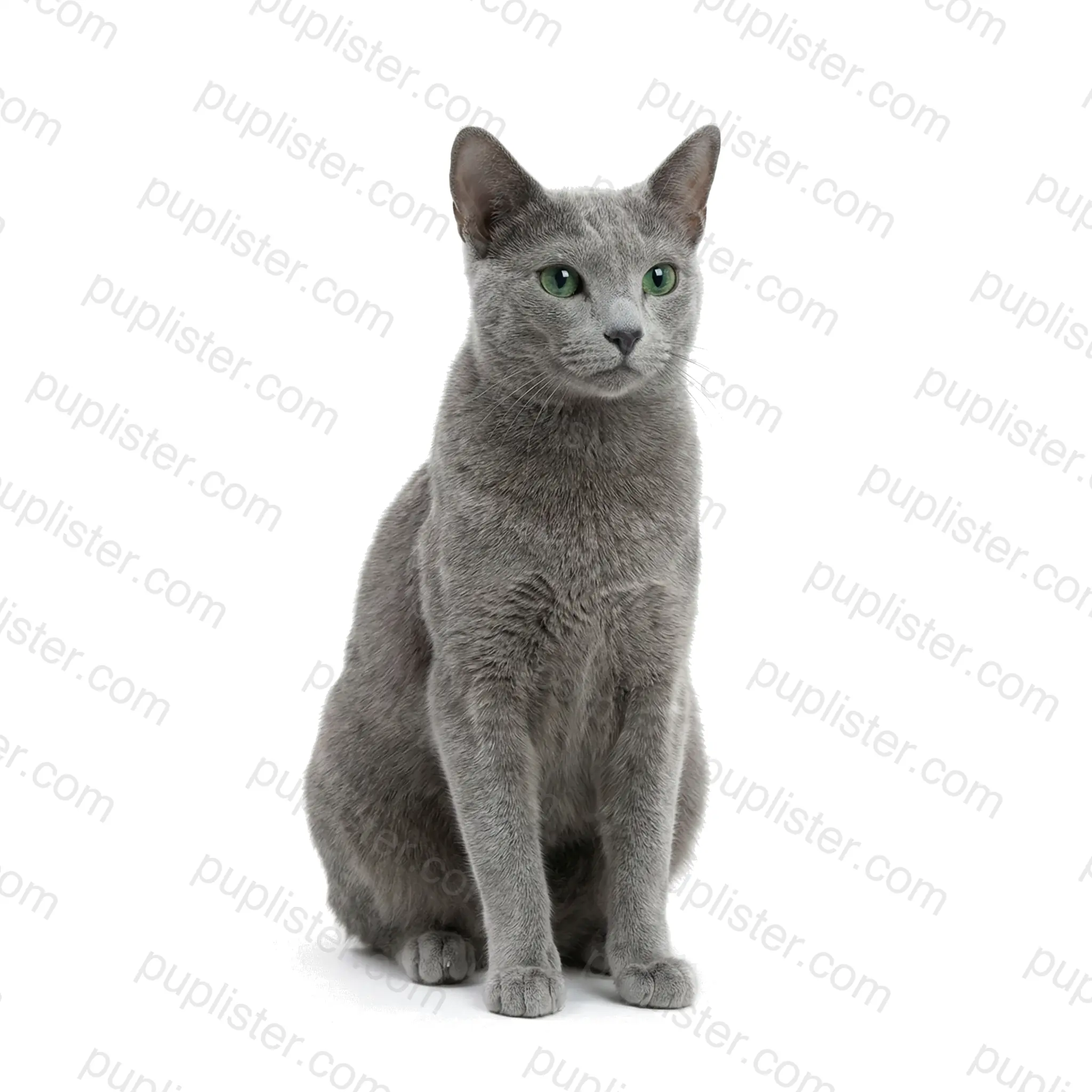
About the Russian Blue The Russian Blue is a naturally occurring breed believed to have originated in the port city of Arkhangelsk (Archangel) in northern Russia, arriving in Europe aboard trade ships in the 1860s. This medium-sized cat weighs 7–12 pounds and is renowned for its dense, plush double coat of uniform blue-gray with silver-tipped guard hairs that give it a luminous shimmer. Its vivid emerald-green eyes, wedge-shaped head, and enigmatic "Mona Lisa smile" complete an unmistakably elegant look.Temperament & PersonalityRussian Blues are gentle, reserved cats that are intensely loyal to their families yet cautious around strangers. They are creatures of habit who thrive on routine — eating at the same time, playing in the same spots, and sleeping in their preferred perch. Once bonded, they are affectionate and playful, often fetching toys and entertaining themselves with quiet grace.ProsProduces lower levels of the Fel d 1 allergen — better tolerated by some allergy sufferersDense double coat is low-shedding and virtually maintenance-freeQuiet and well-mannered — rarely destructive or excessively vocalLong-lived breed with few genetic health issues — many reach 15–20 yearsConsShy and reserved with strangers — may hide during gatherings or partiesSensitive to change — can become stressed by moves, new pets, or schedule disruptionsProne to overeating and weight gain if food is left out freelyCan be slow to warm up to new family members or housematesCharmed by those emerald eyes and silver-tipped fur? Find Russian Blue cats ready for their forever homes on Puplister.

Himalayan
Himalayan Cat

1 pet available

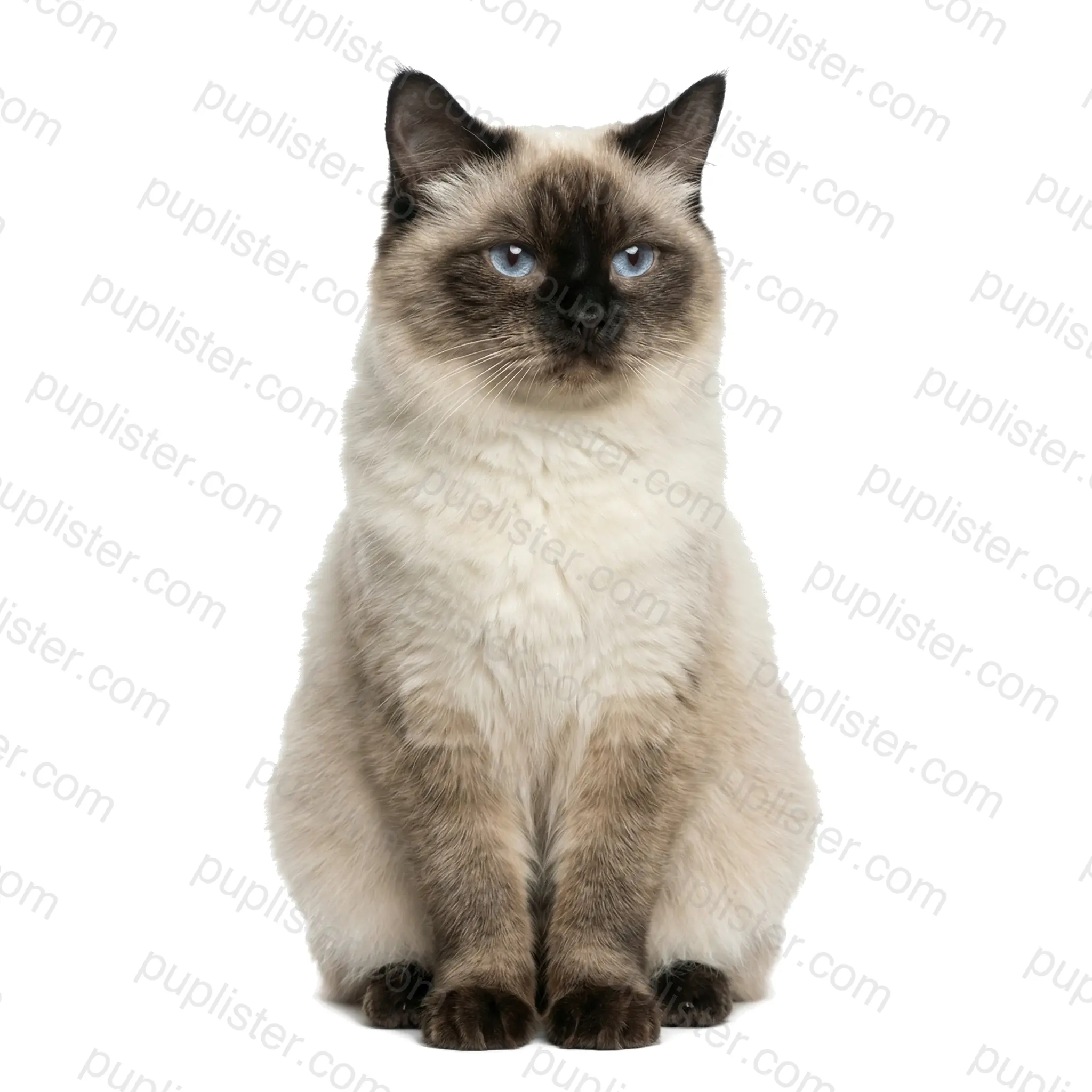
About the Himalayan The Himalayan — known as the Colourpoint Persian in Europe — was developed in the 1930s–1950s by crossing Siamese with Persians to combine the Persian's luxurious coat with Siamese point coloring. This medium-to-large breed weighs 7–14 pounds and has the Persian's flat face, round body, and short legs. Their long, thick, flowing coat comes in all point colors — seal, blue, chocolate, lilac, red, cream, and tortoiseshell — contrasted against a pale cream or white body. Temperament & Personality Himalayans are calm, sweet, and devoted cats that enjoy a serene environment and gentle handling. They are more playful than Persians — thanks to their Siamese heritage — and may enjoy short bursts of activity with a favorite toy. They are patient with well-behaved children and prefer a quiet household, bonding closely with their family while remaining friendly with gentle visitors. Pros Stunningly beautiful — combines Persian elegance with Siamese coloringCalm, gentle personality — ideal for quiet, relaxed householdsDeeply affectionate and loyal to their familyVivid blue eyes inherited from Siamese lineage add to their beauty Cons Coat requires daily grooming — prone to severe matting without consistent careBrachycephalic — prone to breathing difficulties, eye discharge, and dental issuesHigh risk for polycystic kidney disease (PKD) and progressive retinal atrophyHeat-sensitive — must be kept in air-conditioned environments during warm months Ready to pamper a gorgeous Himalayan? Discover cats available for adoption on Puplister today.

Turkish Angora

1 pet available

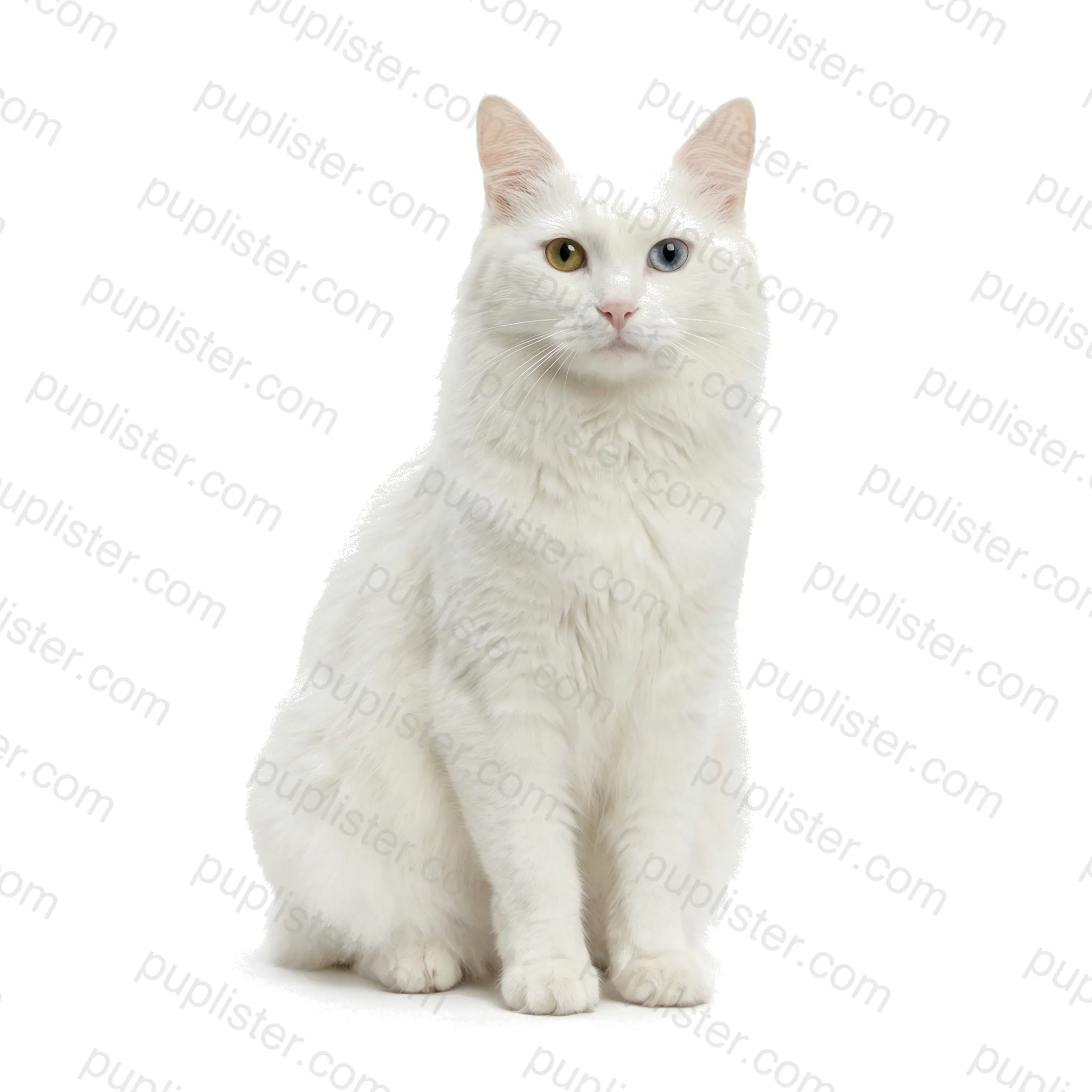
About the Turkish Angora The Turkish Angora is an ancient, naturally occurring breed from central Turkey — specifically the Ankara region — and is one of the oldest known longhaired cat breeds. This small-to-medium cat weighs 5–10 pounds and possesses a graceful, balletic build with a long, plumed tail, silky single-layer coat (no undercoat), and large, walnut-shaped eyes. While white is the most iconic color — often with striking odd eyes (one blue, one amber) — Turkish Angoras come in nearly every color and pattern except pointed.Temperament & PersonalityTurkish Angoras are spirited, intelligent cats that love to be at the center of the action. They are natural athletes — leaping to the highest shelf, opening doors, and inventing games to entertain themselves. Affectionate and strong-willed, they will happily greet guests and supervise every household activity, often choosing one family member as their primary favorite.ProsElegant, silky coat has no undercoat — sheds less and rarely matsHighly intelligent and entertaining — always inventing new games and tricksSocial and welcoming with guests and family alikeNaturally healthy breed with excellent longevity — many live 15–20 yearsConsWhite cats with blue eyes have a high incidence of congenital deafnessStrong-willed and mischievous — can be stubborn about rulesDemands attention and may become disruptive if ignoredProne to ataxia (a hereditary neurological condition) in some linesEntranced by this ancient Turkish treasure? Find Turkish Angora cats looking for loving homes on Puplister and add a touch of grace to your life.

American Bobtail

5 pets available

1

About the American Bobtail The American Bobtail was developed in the 1960s from a naturally occurring short-tailed kitten found in Arizona. This sturdy, medium-to-large breed weighs 7–16 pounds and has a wild, athletic appearance reminiscent of a bobcat. Their coat comes in both short and long varieties in virtually every color and pattern, with their signature bobbed tail ranging from one to four inches long. Temperament & Personality American Bobtails are remarkably adaptable and affectionate cats often described as dog-like in their devotion to family. They get along wonderfully with children, other cats, and even dogs — making them ideal for busy households. Despite their wild appearance, they are gentle, easygoing, and have been used as therapy cats due to their calm, intuitive nature. Pros Exceptionally adaptable — adjusts well to travel and new environmentsGentle and patient with children and other animalsNaturally healthy breed with few genetic predispositionsPlayful yet not overly demanding — enjoys interactive toys and games Cons Can be slow to mature — takes 2–3 years to reach full physical developmentLong-haired variety requires regular brushing to prevent mattingRelatively rare breed — may be difficult to find in sheltersStrong prey drive means small pets like birds or hamsters may be at risk Discover the charm of the American Bobtail — check out adoptable cats of this breed on Puplister.

Related Articles

Frequently Asked Questions

What are the key traits of a Snowshoe?
The Snowshoe is known for being social, affectionate, vocal and intelligent.
How many Snowshoes are available for adoption?
There are currently 2 Snowshoes available for adoption on Puplister. Browse the listings above to find your perfect match.
How do I adopt a Snowshoe from Puplister?
To adopt a Snowshoe, browse the available listings on this page, click on a pet you're interested in, and contact the shelter directly through their profile page.